Is https://git.mills.io/yarnsocial dead?
6.13-rc4: mainline
Version:6.13-rc4 (mainline)Released:2024-12-22Source:linux-6.13-rc4.tar.gzPatch:full ( incremental) ⌘ Read more
↳
In-reply-to
»
For Example:
⤋ Read More
I’ve started a draft over at: https://git.mills.io/yarnsocial/twtxt.dev/src/branch/main/exts/webfinger.md
How to Create and Use an AI Git Agent
We show how to create Git agent and use this Git agent to understand PR branches for a variety of user personas — without needing to know the ins and outs of Git. ⌘ Read more
(#rcpphgq) Oh and I should mention that mbox.blue is running µLinux 😅
Oh and I should mention that mbox.blue is running µLinux 😅 ⌘ Read more
6.13-rc3: mainline
Version:6.13-rc3 (mainline)Released:2024-12-15Source:linux-6.13-rc3.tar.gzPatch:full ( incremental) ⌘ Read more
Neat! 👌 I have been hacking on sshbox and refactored it a fair bit to have much more flexible auth methods. In addition I also toyed around w …
Neat! 👌 I have been hacking on sshbox and refactored it a fair bit to have much more flexible auth methods. In addition I also toyed around with the idea of having a shared (free) unix environment like some of the ones around ( whose name eludes me right now 🤦♂️), with a couple of key differences and differentiators:
- The environment you get is actua … ⌘ Read more
6.13-rc2: mainline
Version:6.13-rc2 (mainline)Released:2024-12-08Source:linux-6.13-rc2.tar.gzPatch:full ( incremental) ⌘ Read more
Over the holiday break I was looking at one of my old projects, µLinux. Turns out I did a fine job realy and have decided to revive the projec …
Over the holiday break I was looking at one of my old projects, µLinux. Turns out I did a fine job realy and have decided to revive the project 🥳 – Just getting the build/tests woring on my Mac Studio ( Apple Silicon). Check it out! 👌  #µLinux ⌘ Read more
(#v72lwdq) Or
Or https://git.mills.io/prologic/static ⌘ Read more
6.13-rc1: mainline
Version:6.13-rc1 (mainline)Released:2024-12-01Source:linux-6.13-rc1.tar.gzPatch:full ⌘ Read more
[LFF] [1.2 XMR] Fundraiser for hosting the Monero archive for one more year
I have now been hosting the monero archive for more than a year now (started sometime in September 2023), I would like to keep on hosting it for one more year (at least). This fundraiser is for one more year of hosting. The price is the same at 0.1 XMR/month for hosting + maintenance.
Links:
- https://kuno.anne.media/fundraiser/yg9f/
- https://git.4rkal.com/
- [archiv32ihkwhf26umylx3u7tg … ⌘ Read more
followers field is deprecated ==>
followers field is deprecated ==> https://git.mills.io/yarnsocial/twtxt.dev/pulls/6 ⌘ Read more
↳
In-reply-to
»
@bender Gave it a try on
⤋ Read More
Termux same thing @doesnm uses and it worked 👍 Media
@doesnm@doesnm.p.psf.lt No it’s all good… I’ve just rebuilt it from master and it doesn’t look like anything is broken:
~/GitRepos> git clone https://github.com/plomlompom/htwtxt.git
Cloning into 'htwtxt'...
remote: Enumerating objects: 411, done.
remote: Total 411 (delta 0), reused 0 (delta 0), pack-reused 411 (from 1)
Receiving objects: 100% (411/411), 87.89 KiB | 430.00 KiB/s, done.
Resolving deltas: 100% (238/238), done.
~/GitRepos> cd htwtxt
master ~/GitRepos/htwtxt> go mod init htwtxt
go: creating new go.mod: module htwtxt
go: to add module requirements and sums:
go mod tidy
master ~/GitRepos/htwtxt> go mod tidy
go: finding module for package github.com/gorilla/mux
go: finding module for package golang.org/x/crypto/bcrypt
go: finding module for package gopkg.in/gomail.v2
go: finding module for package golang.org/x/crypto/ssh/terminal
go: found github.com/gorilla/mux in github.com/gorilla/mux v1.8.1
go: found golang.org/x/crypto/bcrypt in golang.org/x/crypto v0.29.0
go: found golang.org/x/crypto/ssh/terminal in golang.org/x/crypto v0.29.0
go: found gopkg.in/gomail.v2 in gopkg.in/gomail.v2 v2.0.0-20160411212932-81ebce5c23df
go: finding module for package gopkg.in/alexcesaro/quotedprintable.v3
go: found gopkg.in/alexcesaro/quotedprintable.v3 in gopkg.in/alexcesaro/quotedprintable.v3 v3.0.0-20150716171945-2caba252f4dc
master ~/GitRepos/htwtxt> go build
master ~/GitRepos/htwtxt> ll
.rw-r--r-- aelaraji aelaraji 330 B Fri Nov 22 20:25:52 2024 go.mod
.rw-r--r-- aelaraji aelaraji 1.1 KB Fri Nov 22 20:25:52 2024 go.sum
.rw-r--r-- aelaraji aelaraji 8.9 KB Fri Nov 22 20:25:06 2024 handlers.go
.rwxr-xr-x aelaraji aelaraji 12 MB Fri Nov 22 20:26:18 2024 htwtxt <-------- There's the binary ;)
.rw-r--r-- aelaraji aelaraji 4.2 KB Fri Nov 22 20:25:06 2024 io.go
.rw-r--r-- aelaraji aelaraji 34 KB Fri Nov 22 20:25:06 2024 LICENSE
.rw-r--r-- aelaraji aelaraji 8.5 KB Fri Nov 22 20:25:06 2024 main.go
.rw-r--r-- aelaraji aelaraji 5.5 KB Fri Nov 22 20:25:06 2024 README.md
drwxr-xr-x aelaraji aelaraji 4.0 KB Fri Nov 22 20:25:06 2024 templates
↳
In-reply-to
»
Jack Dorsey's Block Scraps 'Web5' Project
Block will abandon development of its Web5 decentralized internet project and reduce investment in music streaming service Tidal to focus on bitcoin mining hardware and self-custody wallets, the payments company announced in its third-quarter letter to shareholders. The Jack Dorsey-led firm cited strong market demand for its bitcoin mining products and Bitkey wallet as key drivers behind the st ... ⌘ Read more
⤋ Read More
@prologic@twtxt.net just rebuild my image.. though git says i am already at latest
↳
In-reply-to
»
Jack Dorsey's Block Scraps 'Web5' Project
Block will abandon development of its Web5 decentralized internet project and reduce investment in music streaming service Tidal to focus on bitcoin mining hardware and self-custody wallets, the payments company announced in its third-quarter letter to shareholders. The Jack Dorsey-led firm cited strong market demand for its bitcoin mining products and Bitkey wallet as key drivers behind the st ... ⌘ Read more
⤋ Read More
@prologic@twtxt.net just rebuild my image.. though git says i am already at latest
6.12-rc7: mainline
Version:6.12-rc7 (mainline)Released:2024-11-10Source:linux-6.12-rc7.tar.gzPatch:full ( incremental) ⌘ Read more
↳
In-reply-to
»
I've been thinking of a few improvements for the next generation of twtxt spec, let me know if these are useful or interesting :) https://text.eapl.mx/a-few-ideas-for-a-next-twtxt-version
⤋ Read More
@eapl.me@eapl.me Neat.
So for twt metadata the lextwt parser currently supports values in the form [key=value]
https://git.mills.io/yarnsocial/go-lextwt/src/branch/main/parser_test.go#L692-L698
↳
In-reply-to
»
I've been thinking of a few improvements for the next generation of twtxt spec, let me know if these are useful or interesting :) https://text.eapl.mx/a-few-ideas-for-a-next-twtxt-version
⤋ Read More
@eapl.me@eapl.me Neat.
So for twt metadata the lextwt parser currently supports values in the form [key=value]
https://git.mills.io/yarnsocial/go-lextwt/src/branch/main/parser_test.go#L692-L698
↳
In-reply-to
»
I've been thinking of a few improvements for the next generation of twtxt spec, let me know if these are useful or interesting :) https://text.eapl.mx/a-few-ideas-for-a-next-twtxt-version
⤋ Read More
Righto, @eapl.me@eapl.me, ta for the writeup. Here we go. :-)
Metadata on individual twts are too much for me. I do like the simplicity of the current spec. But I understand where you’re coming from.
Numbering twts in a feed is basically the attempt of generating message IDs. It’s an interesting idea, but I reckon it is not even needed. I’d simply use location based addressing (feed URL + ‘#’ + timestamp) instead of content addressing. If one really wanted to, one could hash the feed URL and timestamp, but the raw form would actually improve disoverability and would not even require a richer client. But the majority of twtxt users in the last poll wanted to stick with content addressing.
yarnd actually sends If-Modified-Since request headers. Not only can I observe heaps of 304 responses for yarnds in my access log, but in Cache.FetchFeeds(…) we can actually see If-Modified-Since being deployed when the feed has been retrieved with a Last-Modified response header before: https://git.mills.io/yarnsocial/yarn/src/commit/98eee5124ae425deb825fb5f8788a0773ec5bdd0/internal/cache.go#L1278
Turns out etags with If-None-Match are only supported when yarnd serves avatars (https://git.mills.io/yarnsocial/yarn/src/commit/98eee5124ae425deb825fb5f8788a0773ec5bdd0/internal/handlers.go#L158) and media uploads (https://git.mills.io/yarnsocial/yarn/src/commit/98eee5124ae425deb825fb5f8788a0773ec5bdd0/internal/media_handlers.go#L71). However, it ignores possible etags when fetching feeds.
I don’t understand how the discovery URLs should work to replace the User-Agent header in HTTP(S) requests. Do you mind to elaborate?
Different protocols are basically just a client thing.
I reckon it’s best to just avoid mixing several languages in one feed in the first place. Personally, I find it okay to occasionally write messages in other languages, but if that happens on a more regularly basis, I’d definitely create a different feed for other languages.
Isn’t the emoji thing “just” a client feature? So, feed do not even have to state any emojis. As a user I’d configure my client to use a certain symbol for feed ABC. Currently, I can do a similar thing in tt where I assign colors to feeds. On the other hand, what if a user wants to control what symbol should be displayed, similar to the feed’s nick? Hmm. But still, my terminal font doesn’t even render most of emojis. So, Unicode boxes everywhere. This makes me think it should actually be a only client feature.
6.12-rc6: mainline
Version:6.12-rc6 (mainline)Released:2024-11-04Source:linux-6.12-rc6.tar.gzPatch:full ( incremental) ⌘ Read more
(#fmnhewq) @bender@bender Fuck 😅 CI job failed to publish the new OCI image:
@bender Fuck 😅 CI job failed to publish the new OCI image: https://git.mills.io/yarnsocial/yarn/actions/runs/525 ⌘ Read more
👋 PR to propose Feed Format Extension – Request for comment 🙏
👋 PR to propose Feed Format Extension – Request for comment 🙏
👋 PR to propose Feed Format Extension – Request for comment 🙏 ⌘ Read more
6.12-rc5: mainline
Version:6.12-rc5 (mainline)Released:2024-10-27Source:linux-6.12-rc5.tar.gzPatch:full ( incremental) ⌘ Read more
👋 PR to Update Metadata ext to clarify avatar field cc @lyse @movq @sorenpeter and @Codebuzz
👋 PR to Update Metadata ext to clarify avatar field cc @lyse @lyse.isobeef.org @movq @www.uninformativ.de @sorenpeter @darch.dk and [@Codebuzz _@www.co … ⌘ Read more
**(#rjapt4a) I think it uses the first # url too. See here and here – @xuu@xuu Can you confirm this to be the case? 🙏 GetN("url", ...**
I _think_ it uses the first# urltoo. See [here](https://git.mills.io/yarnsocial/go-lextwt/src/branch/main/ast.go#L1062-L1074) and [here](https://git.mills.io/yarnsocial/go-lextwt/src/branch/main/lextwt.go#L88-L95) – [@xuu _@txt.sour.is_](https://twtxt.net/external?uri=https://txt.sour.is/user/xuu/twtxt.txt&nick=xuu) Can you confirm this to be the case? 🙏GetN(“url”, 0)will return the fir ... ⌘ [Read more](https://twtxt.net/twt/5ieybsq)
6.12-rc4: mainline
Version:6.12-rc4 (mainline)Released:2024-10-20Source:linux-6.12-rc4.tar.gzPatch:full ( incremental) ⌘ Read more
How to ace the Certified Argo Project Associate (CAPA) exam
Community post originally published on Medium/IT Next by Giorgi Keratishvili Introduction Over the last five years, GitOps has emerged as one of the most interesting implementations of using GIT in the Kubernetes ecosystem and when people hear about… ⌘ Read more
6.12-rc3: mainline
Version:6.12-rc3 (mainline)Released:2024-10-13Source:linux-6.12-rc3.tar.gzPatch:full ( incremental) ⌘ Read more
↳
In-reply-to
»
@prologic would you please check my web interface? is that a normal thing or am I missing something?
⤋ Read More
Web interface is deleted in https://git.mills.io/saltyim/saltyim/commit/376de2702319686c902ec03b8ca1e17b020fc639 but seems incorrectly (in source i see git lfs metadata). Can be builded if you grab https://git.mills.io/saltyim/saltyim/src/commit/15a64de82829/internal/web/app.wasm and place it in source (go directory has cached source) and rebuild
Highlights from Git 2.47
Git 2.47 is here, with features like incremental multi-pack indexes and more. Check out our coverage of some of the highlights here.
The post Highlights from Git 2.47 appeared first on The GitHub Blog. ⌘ Read more
6.12-rc2: mainline
Version:6.12-rc2 (mainline)Released:2024-10-06Source:linux-6.12-rc2.tar.gzPatch:full ( incremental) ⌘ Read more
How, this is some funny easter egg: https://git.savannah.nongnu.org/cgit/man-db.git/commit/src/man.c?id=002a6339b1fe8f83f4808022a17e1aa379756d99
↳
In-reply-to
»
@prologic I wanted to wait for things to settle down. It’s still unclear to me in which direction we’re going – and if that new/different stuff is even possible to implement in jenny. That said, I’ve been really busy with private stuff these last few days, I’ve lost track of most of what you’re discussing. 🥴
⤋ Read More
I share I did write up an algorithm for it at some point I think it is lost in a git comment someplace. I’ll put together a pseudo/go code this week.
Super simple:
Making a reply:
- If yarn has one use that. (Maybe do collision check?)
- Make hash of twt raw no truncation.
- Check local cache for shortest without collision
- in SQL:
select len(subject) where head_full_hash like subject || '%'
- in SQL:
Threading:
- Get full hash of head twt
- Search for twts
- in SQL:
head_full_hash like subject || '%' and created_on > head_timestamp
- in SQL:
The assumption being replies will be for the most recent head. If replying to an older one it will use a longer hash.
↳
In-reply-to
»
@prologic I wanted to wait for things to settle down. It’s still unclear to me in which direction we’re going – and if that new/different stuff is even possible to implement in jenny. That said, I’ve been really busy with private stuff these last few days, I’ve lost track of most of what you’re discussing. 🥴
⤋ Read More
I share I did write up an algorithm for it at some point I think it is lost in a git comment someplace. I’ll put together a pseudo/go code this week.
Super simple:
Making a reply:
- If yarn has one use that. (Maybe do collision check?)
- Make hash of twt raw no truncation.
- Check local cache for shortest without collision
- in SQL:
select len(subject) where head_full_hash like subject || '%'
- in SQL:
Threading:
- Get full hash of head twt
- Search for twts
- in SQL:
head_full_hash like subject || '%' and created_on > head_timestamp
- in SQL:
The assumption being replies will be for the most recent head. If replying to an older one it will use a longer hash.
6.12-rc1: mainline
Version:6.12-rc1 (mainline)Released:2024-09-29Source:linux-6.12-rc1.tar.gzPatch:full ⌘ Read more
↳
In-reply-to
»
Only with dovecot xD. For mail im use android native mail client and not mutt. And jenny display some errors with found some files and /tmp dir (android dont have /tmp)
⤋ Read More
I believe I’d missed an f:
~/src/jenny $ git diff
diff --git a/jenny b/jenny
index ada8da2..8ae9a06 100755
--- a/jenny
+++ b/jenny
@@ -1194,7 +1194,7 @@ if __name__ == '__main__':
     if args.edit:
	edit_twt_file(app)
     elif args.fetch:
-        with DirectoryLock(f'/tmp/jenny-{getuser()}.run'):
+        with DirectoryLock(expanduser(f'~/tmp/jenny-{getuser()}.run')):
             retrieve_all(app)
     elif args.last_seen:
	 print('Feeds last seen at (times are local time), oldest first:')
↳
In-reply-to
»
Only with dovecot xD. For mail im use android native mail client and not mutt. And jenny display some errors with found some files and /tmp dir (android dont have /tmp)
⤋ Read More
@doesnm@doesnm.p.psf.lt I’ve just given it a try on android/termux and got it to work, I can’t promise it won’t break something else (because i definitely don’t know what I’m doing) but here’s what I broke 😅:
~/src/jenny $ git diff
diff --git a/jenny b/jenny
index ada8da2..8ae9a06 100755
--- a/jenny
+++ b/jenny
@@ -1194,7 +1194,7 @@ if __name__ == '__main__':
     if args.edit:
	edit_twt_file(app)
     elif args.fetch:
-        with DirectoryLock(f'/tmp/jenny-{getuser()}.run'):
+        with DirectoryLock(expanduser('~/tmp/jenny-{getuser()}.run')):
             retrieve_all(app)
     elif args.last_seen:
	 print('Feeds last seen at (times are local time), oldest first:')
and of course make sure you mkdir ~/tmp
↳
In-reply-to
»
I'm looking to develop a static site for twtxt.dev -- A domain I own and have wanted to use for developer and specification docs for Twtxt.
⤋ Read More
↳
In-reply-to
»
How to read twts without browser? I dont understand context in reply messages
⤋ Read More
Diving into mblaze, I think I’ve nearly* reached peek email geek.
Just a bunch of shell commands I can pipe together to search, list, view and reply to email (after syncing it to a local Maildir).
EXAMPLES at https://git.vuxu.org/mblaze/tree/README
So far I’m using most of the tools directly from the command line, but I might take inspiration from https://sr.ht/~rakoo/omail/ to make my workflow a bit more efficient.
*To get any closer, I think I’d have to hand-craft my own SMTP client or something.
↳
In-reply-to
»
@doesnm Fot a sample access log? Which tool are you using?
⤋ Read More
Official yarn.social tool: git.mills.io/yarnsocial/useragent
Had to build a list of all feeds (that I follow) and all twts in them and there are two collisions already:
$ ./stats
Saw 58263 hashes
7fqcxaa
  https://twtxt.net/user/justamoment/twtxt.txt
  https://twtxt.net/user/prologic/twtxt.txt
ntnakqa
  https://twtxt.net/user/prologic/twtxt.txt
  https://twtxt.net/user/thecanine/twtxt.txt
Namely:
$ jenny -D https://twtxt.net/user/justamoment/twtxt.txt | grep 7fqcxaa
[7fqcxaa] [2022-12-28 04:53:30+00:00] [(#pmuqoca) @prologic@twtxt.net I checked the GitHub discussion, it became a request to join forces.
Do you plan on having them join?
Also for the name, how about:
- “progit” or “prologit” (prologic official hard fork)
- “git-stance” (git instance)
- “GitTree” (Gitea inspired, maybe to related)
- “Gitomata” (git automata)
- “Git.Source”
- “Forgor” (forgit is taken so I forgor) 🤣
- “SweetGit” (as salty chat)
- “Pepper Git” (other ingredients) 😉
- “GitHeart” (core of git with a GitHub sounding name)
- “GitTaka” (With music in mind)
Ok, enough fun… Hope this helps sprout some ideas from others if nothing is to your taste.]
$ jenny -D https://twtxt.net/user/prologic/twtxt.txt/5 | grep 7fqcxaa
[7fqcxaa] [2022-02-25 21:14:45+00:00] [(#bqq6fxq) It’s handled by blue Monday]
And:
$ jenny -D https://twtxt.net/user/thecanine/twtxt.txt | grep ntnakqa
[ntnakqa] [2022-01-23 10:24:09+00:00] [(#2wh7r4q) <a href="https://txt.sour.is/external?uri=https://twtxt.net/user/prologic/twtxt.txt">@prologic<em>@twtxt.net</em></a> I know, I was just hoping it might have also gotten fixed by that change, by some kind of backend miracles. 😂]

$ jenny -D https://twtxt.net/user/prologic/twtxt.txt/1 | grep ntnakqa
[ntnakqa] [2024-02-27 05:51:50+00:00] [(#otuupfq) <a href="https://txt.sour.is/external?uri=https://twtxt.net/user/shreyan/twtxt.txt">@shreyan<em>@twtxt.net</em></a>  Ahh 👌]
Alright, before I go and watch Formula 1 😅, I made two PRs regarding the two “competing” ideas:
- https://git.mills.io/yarnsocial/yarn/pulls/1179 –
(replyto:…)
- https://git.mills.io/yarnsocial/yarn/pulls/1180 –
(edit:…)and(delete:…)
As a first step, this summarizes my current understanding. Please comment! 😊
↳
In-reply-to
»
I wrote some code to try out non-hash reply subjects formatted as (replyto ), while keeping the ability to use the existing hash style.
⤋ Read More
I forgot to git add a new test file. Added to the patch now at https://www.falsifian.org/a/oDtr/patch0.txt
Can I get someone like maybe @xuu@txt.sour.is or @abucci@anthony.buc.ci or even @eldersnake@we.loveprivacy.club – If you have some spare time – to test this yarnd PR that upgrades the Bitcask dependency for its internal database to v2? 🙏
VERY IMPORTANT If you do; Please Please Please backup your yarn.db database first! 😅 Heaven knows I don’t want to be responsible for fucking up a production database here or there 🤣
Oh. looks like its 4 chars. git show 64bf
Oh. looks like its 4 chars. git show 64bf
the stem matching is the same as how GIT does its branch hashes. i think you can stem it down to 2 or 3 sha bytes.
if a client sees someone in a yarn using a byte longer hash it can lengthen to match since it can assume that maybe the other client has a collision that it doesnt know about.
the stem matching is the same as how GIT does its branch hashes. i think you can stem it down to 2 or 3 sha bytes.
if a client sees someone in a yarn using a byte longer hash it can lengthen to match since it can assume that maybe the other client has a collision that it doesnt know about.
↳
In-reply-to
»
(#lryyjla) @quark My money is on a SHA1SUM hash encoding to keep things much simpler:
⤋ Read More
@prologic@twtxt.net Wikipedia claims sha1 is vulnerable to a “chosen-prefix attack”, which I gather means I can write any two twts I like, and then cause them to have the exact same sha1 hash by appending something. I guess a twt ending in random junk might look suspcious, but perhaps the junk could be worked into an image URL like
. If that’s not possible now maybe it will be later.git only uses sha1 because they’re stuck with it: migrating is very hard. There was an effort to move git to sha256 but I don’t know its status. I think there is progress being made with Game Of Trees, a git clone that uses the same on-disk format.
I can’t imagine any benefit to using sha1, except that maybe some very old software might support sha1 but not sha256.
I have configured my twtxt.txt as simple as possible. I have setup a publish_command on jenny. Hopefully all works fine, and I am good to go. Next will be setting the announce_me to true. Here we go!
Hey, @movq@www.uninformativ.de, a tiny thing to add to jenny, a -v switch. That way when you twtxt “That’s an older format that was used before jenny version v23.04”, I can go and run jenny -v, and “duh!” myself on the way to a git pull. :-D
↳
In-reply-to
»
(replyto http://darch.dk/twtxt.txt 2024-09-15T12:50:17Z) Hmm, but yarnd also isn't showing these twts as being part of a thread. @prologic you said yarnd respects customs subjects. Shouldn't these twts count as having a custom subject, and get threaded together?
⤋ Read More
@falsifian@www.falsifian.org yes, that happened around 2 years ago, on commit 5923078ea5.
Opened a couple of issues on twtxt2html. Maybe @prologic@twtxt.net will get to them after he has completed his luxurious recharging cycle. LOL.
↳
In-reply-to
»
@sorenpeter It's nobody's fault! 😇 It's all part of the fun with them Ones and Zeros
⤋ Read More
@bender@twtxt.net It’s just a simple twtxt2html and scp … it goes like:
twtxt2html $HOME/path/to/local_twtxt_dir/twtxt.txt > $HOME/path/to/local_twtxt_dir/log.html && \
scp $HOME/path/to/local_twtxt_dir/log.html user@remotehost:/path/to/static_files_dir/
I’ve been lazy to add it to my publish_command script, now I can just copy/pasta from the twt 😅
Alright, I saw enough broken threads lately to be motivated enough to extend the --fetch-context thingy: It can now ask Yarn pods for twt hashes.
https://www.uninformativ.de/git/jenny/commit/eefd3fa09083e2206ed0d71887d2ef2884684a71.html
This is only done as a last resort if there’s no other way to find the missing twt. Like, when there’s a twt that begins with just a hash and no user mention, there’s no way for jenny to know on which feed that twt can be found, so it’ll ask some Yarn pod in that case.
↳
In-reply-to
»
On the Subject of Feed Identities; I propose the following:
⤋ Read More
@mckinley@twtxt.net To answer some of your questions:
Are SSH signatures standardized and are there robust software libraries that can handle them? We’ll need a library in at least Python and Go to provide verified feed support with the currently used clients.
We already have this. Ed25519 libraries exist for all major languages. Aside from using ssh-keygen -Y sign and ssh-keygen -Y verify, you can also use the salty CLI itself (https://git.mills.io/prologic/salty), and I’m sure there are other command-line tools that could be used too.
If we all implemented this, every twt hash would suddenly change and every conversation thread we’ve ever had would at least lose its opening post.
Yes. This would happen, so we’d have to make a decision around this, either a) a cut-off point or b) some way to progressively transition.
6.11-rc7: mainline
Version:6.11-rc7 (mainline)Released:2024-09-08Source:linux-6.11-rc7.tar.gzPatch:full ( incremental) ⌘ Read more
6.11-rc6: mainline
Version:6.11-rc6 (mainline)Released:2024-09-01Source:linux-6.11-rc6.tar.gzPatch:full ( incremental) ⌘ Read more
6.11-rc5: mainline
Version:6.11-rc5 (mainline)Released:2024-08-25Source:linux-6.11-rc5.tar.gzPatch:full ( incremental) ⌘ Read more
↳
In-reply-to
»
@prologic, does this rings a bell to you?
⤋ Read More
159-196-9-199.9fc409.mel.nbn.aussiebb.net
I’m wrong! Both 404 and 410, among others, are considered dead feeds: https://git.mills.io/yarnsocial/yarn/src/branch/main/internal/cache.go#L1343 Whatever that actually means.
How to level up your Git game with GitHub CLI
Using Git in the CLI can improve your development speed and power. Here are our top eight commands for using GitHub via your command line.
The post How to level up your Git game with GitHub CLI appeared first on The GitHub Blog. ⌘ Read more
Highlights from Git 2.46
Git 2.46 is here with new features like pseudo-merge bitmaps, more capable credential helpers, and a new git config command. Check out our coverage on some of the highlights here.
The post Highlights from Git 2.46 appeared first on The GitHub Blog. ⌘ Read more
@stigatle@yarn.stigatle.no / @abucci@anthony.buc.ci My current working theory is that there is an asshole out there that has a feed that both your pods are fetching with a multi-GB avatar URL advertised in their feed’s preamble (metadata). I’d love for you both to review this PR, and once merged, re-roll your pods and dump your respective caches and share with me using https://gist.mills.io/
How an AI Assistant Can Help Configure Your Project’s Git Hooks
Make Git hooks easier to configure and use by providing project-specific context to Docker’s AI Assistant. ⌘ Read more
Beginner’s guide to GitHub repositories: How to create your first repo
Git started on your first repository in the third installment of GitHub for Beginners. Discover the essential features and settings to manage your projects effectively.
The post Beginner’s guide to GitHub repositories: How to create your first repo appeared first on [The GitHub Blog](https … ⌘ Read more
@prologic@twtxt.net Righteo, so rookie error - I obviously had some untracked, rather important files for starting my pod and I ran a make clean. Why I originally had them in the git directory is anyone’s guess. Anyway it blew away those files including the database so that’s that. So your good self and @bender@twtxt.net etc - apologies but your profiles got nuked as well (as did my own but easily recreated).
Another thing I noticed which was the reason I ran make clean in the first place. I noticed my pod was being built with Go 1.22.4. Could this be a problem @prologic? preflight.sh actually errors out about it…
Top 12 Git commands every developer must know
The latest installment of GitHub for Beginners, where we cover the essential Git commands to get you Git-literate.
The post Top 12 Git commands every developer must know appeared first on The GitHub Blog. ⌘ Read more
What is Git? Our beginner’s guide to version control
Let’s get you started on your Git journey with basic concepts to know, plus a step-by-step on how to install and configure the most widely used version control system in the world.
The post What is Git? Our beginner’s guide to version control appeared first on The GitHub Blog. ⌘ Read more
Securing Git: Addressing 5 new vulnerabilities
Git is releasing several new versions to address five CVEs. Upgrading to the latest Git version is essential to protect against these vulnerabilities.
The post Securing Git: Addressing 5 new vulnerabilities appeared first on The GitHub Blog. ⌘ Read more
Highlights from Git 2.45
Git 2.45 is here with experimental support for reftables, and SHA-256 interoperability. Get our take on the latest here.
The post Highlights from Git 2.45 appeared first on The GitHub Blog. ⌘ Read more
Fix “warning: unable to access /Users/Name/.config/git/attributes Permission Denied” Errors
If you’re at the command line and perhaps interacting with Homebrew, Git, or similar, you may run into an error message that says something like the following “warning: unable to access /Users/Name/.config/git/attributes” : Permission denied”. This error message sounds more alarming than it is in most cases, but regardless, you likely want to fix … ⌘ Read more
You can’t catch the kill signal. Should this be syscall.SIGTERM instead of os.Kill, xuu? https://git.sour.is/sour-is/go-paste/src/branch/main/main.go#L21
You are totally right.. i think i was going for SIGTERM and SIGQUIT
You can’t catch the kill signal. Should this be syscall.SIGTERM instead of os.Kill, xuu? https://git.sour.is/sour-is/go-paste/src/branch/main/main.go#L21
You are totally right.. i think i was going for SIGTERM and SIGQUIT
Highlights from Git 2.44
The first Git release of 2024 is here! Take a look at some of our highlights on what’s new in Git 2.44.
The post Highlights from Git 2.44 appeared first on The GitHub Blog. ⌘ Read more
I noticed that some of my software projects have a rather long lifetime, so I made a little graph:
Scaling Docker Compose Up
Manage microservice sprawl with Docker Compose by importing subprojects from other Git repos. Compose Watch provides the benefits of container-first development without compromising on developer experience. ⌘ Read more
@prologic@twtxt.net why am I getting this on your git? 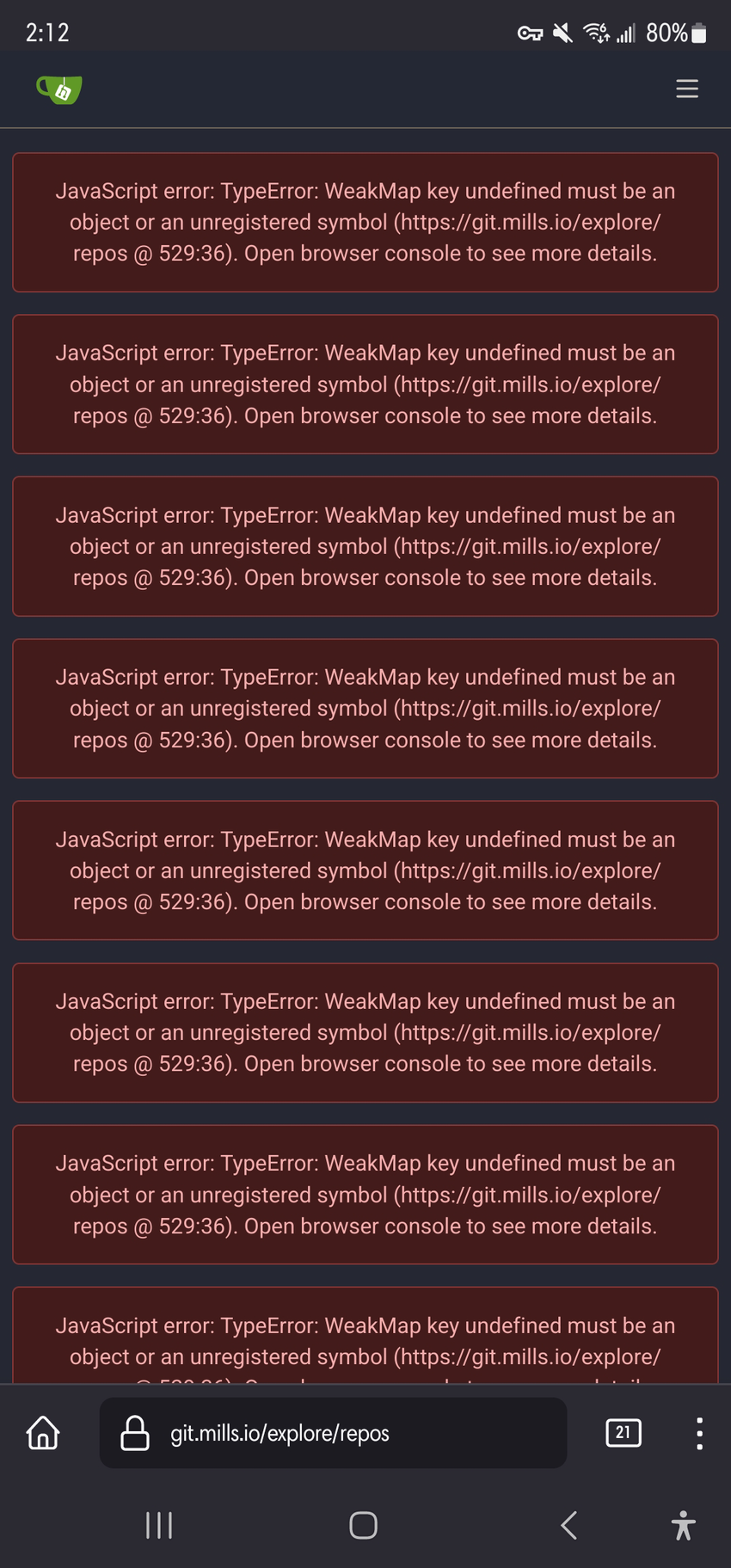
@prologic@twtxt.net why am I getting this on your git?
Twtxt spec enhancement proposal thread 🧵
Adding attributes to individual twts similar to adding feed attributes in the heading comments.
https://git.mills.io/yarnsocial/go-lextwt/pulls/17
The basic use case would be for multilingual feeds where there is a default language and some twts will be written a different language.
As seen in the wild: https://eapl.mx/twtxt.txt
The attributes are formatted as [key=value]
They can show up in the twt anywhere it is not enclosed by another element such as codeblock or part of a markdown link.
Twtxt spec enhancement proposal thread 🧵
Adding attributes to individual twts similar to adding feed attributes in the heading comments.
https://git.mills.io/yarnsocial/go-lextwt/pulls/17
The basic use case would be for multilingual feeds where there is a default language and some twts will be written a different language.
As seen in the wild: https://eapl.mx/twtxt.txt
The attributes are formatted as [key=value]
They can show up in the twt anywhere it is not enclosed by another element such as codeblock or part of a markdown link.
Empowering Uruguay’s future workforce with AI
During the second cycle of Git Commit Uruguay, students learned the basics of AI and built their own AI-powered projects.
The post Empowering Uruguay’s future workforce with AI appeared first on The GitHub Blog. ⌘ Read more
↳
In-reply-to
»
man... day17 has been a struggle for me.. i have managed to implement A* but the solve still takes about 2 minutes for me.. not sure how some are able to get it under 10 seconds.
⤋ Read More
So, I finally got day 17 to under a second on my machine. (in the test runner it takes 10)
I implemented a Fibonacci Heap to replace the priority queue to great success.
https://git.sour.is/xuu/advent-of-code/src/branch/main/search.go#L168-L268
↳
In-reply-to
»
man... day17 has been a struggle for me.. i have managed to implement A* but the solve still takes about 2 minutes for me.. not sure how some are able to get it under 10 seconds.
⤋ Read More
So, I finally got day 17 to under a second on my machine. (in the test runner it takes 10)
I implemented a Fibonacci Heap to replace the priority queue to great success.
https://git.sour.is/xuu/advent-of-code/src/branch/main/search.go#L168-L268
↳
In-reply-to
»
@xuu That was one of the horror puzzles where I had to look for help. 🥴 I modelled my solution after this: https://www.youtube.com/watch?v=2pDSooPLLkI (I can’t explain it better than the video anyway.) It takes a second on my machine and that’s with my own hashmap implementation which is probably not the fastest one.
⤋ Read More
OH MY FREAKING HECK. So.. I made my pather able to run as Dijkstra or A* if the interface includes a heuristic.. when i tried without the heuristic it finished faster :|
So now to figure out why its not working right.
↳
In-reply-to
»
@xuu That was one of the horror puzzles where I had to look for help. 🥴 I modelled my solution after this: https://www.youtube.com/watch?v=2pDSooPLLkI (I can’t explain it better than the video anyway.) It takes a second on my machine and that’s with my own hashmap implementation which is probably not the fastest one.
⤋ Read More
OH MY FREAKING HECK. So.. I made my pather able to run as Dijkstra or A* if the interface includes a heuristic.. when i tried without the heuristic it finished faster :|
So now to figure out why its not working right.
man… day17 has been a struggle for me.. i have managed to implement A* but the solve still takes about 2 minutes for me.. not sure how some are able to get it under 10 seconds.
Solution: https://git.sour.is/xuu/advent-of-code/src/branch/main/day17/main.go
A* PathFind: https://git.sour.is/xuu/advent-of-code/src/branch/main/search.go
some seem to simplify the seen check to only be horizontal/vertical instead of each direction.. but it doesn’t give me the right answer
man… day17 has been a struggle for me.. i have managed to implement A* but the solve still takes about 2 minutes for me.. not sure how some are able to get it under 10 seconds.
Solution: https://git.sour.is/xuu/advent-of-code/src/branch/main/day17/main.go
A* PathFind: https://git.sour.is/xuu/advent-of-code/src/branch/main/search.go
some seem to simplify the seen check to only be horizontal/vertical instead of each direction.. but it doesn’t give me the right answer
** New year **
The last weeks of 2023 have been very enjoyable. Other than having to deal with a cascade of car issues, there’s been a lot of time to hang out with the partner and kids, wander around outside, and poke at fun personal projects…and I mean, work, too, but…you know.
The other evening I pulled together a fun Markov chain toy. It isn’t anything fancy, but I wanted the ability to feed a madlib style script to the program and have it use that as a template to fill in. The resulting program is beak and … ⌘ Read more
↳
In-reply-to
»
But when you do take the time to analyze / reverse-engineer this puzzle, then it’s really cool. Might be my favorite one so far. 😃
⤋ Read More
@movq@www.uninformativ.de So.. i eventually made it to the end on this one.. was able to reuse code from days 8 and 9!
SSBzdGlsbCBkbyBub3QgdW5kZXJzdGFuZCB3aHkgdXNpbmcgdGhlIHJhdGUgb2YgY2hhbmdlIGlu
IHRoZSBwdXNoZXMgZ2l2ZXMgbWUgdGhlIGFuc3dlci4uIGJ1dCB5ZWFoLi4K
↳
In-reply-to
»
But when you do take the time to analyze / reverse-engineer this puzzle, then it’s really cool. Might be my favorite one so far. 😃
⤋ Read More
@movq@www.uninformativ.de So.. i eventually made it to the end on this one.. was able to reuse code from days 8 and 9!
SSBzdGlsbCBkbyBub3QgdW5kZXJzdGFuZCB3aHkgdXNpbmcgdGhlIHJhdGUgb2YgY2hhbmdlIGlu
IHRoZSBwdXNoZXMgZ2l2ZXMgbWUgdGhlIGFuc3dlci4uIGJ1dCB5ZWFoLi4K
將 go 代碼打包成 docker 鏡像
概述–在本教程中,你將生成一個容器映像。該映像包括運行應用程序所需的一切:編譯的應用程序二進制文件、運行時、庫以及應用程序所需的所有其他資源。前置條件—-若要完成本教程,需要滿足以下條件:golang 1.19+ 本地安裝了 docker Git 客戶端 程序–該應用程序提供兩個 HTTP endpoint:/ 返回符號 < 3 /health 返回 {“Statu ⌘ Read more
↳
In-reply-to
»
@movq It took a little over a minute on my machine.. i should try to make it multi threaded.. 🤔
⤋ Read More
Its the latest ryzen 7 chipset for laptop/mini form factor.
I am very surprised about the times others are getting. I guess that’s the difference between interpreted and compiled showing.
↳
In-reply-to
»
@movq It took a little over a minute on my machine.. i should try to make it multi threaded.. 🤔
⤋ Read More
Its the latest ryzen 7 chipset for laptop/mini form factor.
I am very surprised about the times others are getting. I guess that’s the difference between interpreted and compiled showing.
↳
In-reply-to
»
Day 3 of #AdventOfCode puzzle 😅
⤋ Read More
@movq@www.uninformativ.de Dang. Really going overboard with this!
@prologic@twtxt.net I didn’t have to do much backtracking. I parsed into an AST-ish table and then just needed some lookups.
The part 2 was pretty easy to work into the AST after.
https://git.sour.is/xuu/advent-of-code-2023/commit/c894853cbd08d5e5733dfa14f22b249d0fb7b06c
↳
In-reply-to
»
Day 3 of #AdventOfCode puzzle 😅
⤋ Read More
@movq@www.uninformativ.de Dang. Really going overboard with this!
@prologic@twtxt.net I didn’t have to do much backtracking. I parsed into an AST-ish table and then just needed some lookups.
The part 2 was pretty easy to work into the AST after.
https://git.sour.is/xuu/advent-of-code-2023/commit/c894853cbd08d5e5733dfa14f22b249d0fb7b06c
↳
In-reply-to
»
Day 2, Part 1 and Day 2, Part 2 of #AdvenOfCode all done and dusted 😅
⤋ Read More
My code is here. https://git.sour.is/xuu/advent-of-code-2023