↳
In-reply-to
»
@lyse Awww, that sounds like a typical experience at school. 😅 They meant well but somehow it was still shitty …
⤋ Read More
@movq@www.uninformativ.de Hahaha. It could have been worse, though. I’ve heard stories from others that were many levels crazier than what I experienced. And I’m glad that I was very, very lucky with almost all of my teachers throughout all of school. One of my maths teacher, who was also my computer science teacher then, is the reason I do what I do for a living. It’s all his fault! ;-)
Ja, possibly a BaWü thing. The ministry of education and cultural affairs changes the rules, curriculums and details every one or two years, anyway.
Said teacher had to fight real hard that he was allowed to teach CS in class 12 and 13. As a real subject, that is, not just an extracurricular activity („AG“). At first, the ministry refused, because we’re just am „allgemeinbildendes Gmyi“, not an „informationstechnisches Gymi“. It’s insane, you’ve got super motivated (and technically as well as humanly excellent) teachers and then forbid them to offer a class. What the hell!? (Fun fact on top, he had a doctor in CS and was also teaching at the university of applied sciences.)
Eventually, they granted permission to only have a two hours a week class („zweistündig, wie Nebenfach“). One or two years later – too late for me, unfortunately – they allowed four hours a week („vierstündig, wie Hauptfach“). But each pupil had to sign upfont that they will not take CS class in the Abi. That was still exclusive to ITGs only. Completely ridiculous.
I reckon, you can talk to any random teacher and they will endlessly tell you about very dubious decicions from the ministry. :-/
↳
In-reply-to
»
@lyse Ah, you mean the categorization. Yeah, that would never work in Windows, at least not without having a centralized package manager (so there’s one authoritative source of which program belongs into which category).
⤋ Read More
@movq@www.uninformativ.de That’s right, way harder than centrally managed. They even didn’t reach concensus over the main folder: “Alle Programme, “Alle Programme (x86)”, “All Programs”, “All Programmes”, etc. Anyway.
For class 11 (or maybe already in 10, I don’t remember exactly) we could choose either between traditional maths class with a graphical calculator or “Mathe mit CAS”. There were two teachers in my entire school who were able to teach the latter. It was also fairly new at the time I believe. Certainly unheard of for a „allgemeinbildendes Gymnasium“, maybe the technical ones were already offering it for some time, not sure. It was clear to me that I would take the maths with CAS class.
Each kid had to buy their own Cassiopeia A-Something. I don’t know how much that thing was (definitely more expensive than a graphical calculator) and whether the school subsidized that in any form. But it was slow and underpowered as hell. We rarely used it in class nor for homework (most if not all had already a desktop at home). Typically, when we worked with the CAS, we sat down on the desktop computers. Our class took place in one of the two computer rooms. The desktops were placed on the three sides (left, right, back, facing the walls or windows) and the regular school desks were in the middle. Since there were more pupils than desktops, we always shared. Nowadays, we call it pair programming. ;-)
For the exams we had the “mandatory part” (Pflichtteil) without any tools. Once we finished that and handed the papers to our teacher, we were then allowed to boot up our Cassiopeias and work with them for the second part. Before the exam started, everyone had to show the teacher that they reset their small computer to factory settings. This second part was called „Wahlteil“. But you had to do it in order to pass. So, I never understood the choice of this term. Maybe it’s because the first part is the exact same for everyone (graphical calculator and CAS class), but the second part was definitely different for the two classes. Each suited to their tools.
After one or two exams, it became clear that the Cassiopeia was far from ideal. So, we took the second part at the desktop computers from then on. Our teacher unplugged the network cables himself to avoid cheating. Each computer had an “HDD Sheriff” running that reset the disk at startup. There was also an issue that the personal user accounts were affected by that. Sometimes all your data were lost. If you were lucky, they were still there. So, we saved our Maple project to local disk (if the computer didn’t crash in between, that was no problem) and at least eventually before leaving the classroom, we then also saved it on the server. For that, the teacher quickly plugged in the cable, we saved, and then the cable was unplugged again immediately. Oh, and everybody used their USB sticks, too.
All in all, this Cassiopeia A-* was quite a useless purchase. :-D I’m not sure if I still have it. At least I thought several times about giving it to the flea market. Don’t know if I did or not.
↳
In-reply-to
»
@lyse In what way was KDE 3’s menu organized? KDE 1 is the only KDE version I ever used. 😅 We’re talking about this one, right?
⤋ Read More
@movq@www.uninformativ.de Yes, this screenshot. However, not the Dutch but rather the German version, no wonder it looks so crazy!!1!11
It’s been a hot minute or two since I last used KDE, so I don’t remember exactly. I just vaguely recall that I found myself thinking multiple times that the KDE application categories were better matching or there were more or something like that. Most of my classmates were on Windows and had one giant long list of all sort of stuff in there. You even had to scroll in the menu. Sure, they installed all kind of garbage, which didn’t exactly help. Where in KDE, they were actually grouped by Office, Internet, Graphics, Multimedia, Games, etc. In Windows, applications usually hid themselves in a sub folder named after the software vendor. At least in the later (?) days.
I only used Win 95, 98 and XP at home. For maths class with computer algebra system (Maple), we had a Cassiopeia with Win CE: https://en.wikipedia.org/wiki/Casio_Cassiopeia At school, there was probably also Win 2000, but I don’t know anymore for sure.
Hundreds of schools to roll out year 1 maths checks next term
The checks will become mandatory in all public primary schools from next year, but some principals warn it isn’t the best use of resources. ⌘ Read more
Maths camps and coding programs in $75m boost for Victoria’s brightest students
Extra programs on botany, music and dance are also part of a $75 million state government announcement of free extension programs for prep to year 12. ⌘ Read more
Terence Tao’s groundbreaking maths formula is so simple, anyone can follow it
The Australian mathematician has been given one of the highest awards in the Kings Birthday Honours list. This is why. ⌘ Read more
Melbourne maths teacher drugged, bashed with baseball bat, then dumped in canal, say Indian police
Police in the city of Amritsar have accused Sunil Sharma’s brother of murdering the Melbourne teacher over a property dispute. ⌘ Read more
Melbourne maths teacher remembered as Indian police charge brother with brutal murder
Police in the city of Amritsar have accused Sunil Sharma’s brother of murdering the Melbourne teacher over a property dispute. ⌘ Read more
↳
In-reply-to
»
@prologic don’t get mad at me, but the long block of text didn’t address any of my questions. 😜😅
⤋ Read More
@bender@twtxt.net Fine, Let me answer properly and concretely 😅
Would you want your children not to learn anything, because “they have AI”?
No, children still need to learn. That will never change. What they learn however will over time.
Are you OK with your children using the AI for all of their homework?
Yes, frankly I am. Why? Because much of what we teach them in school is utterly pointless.
For example, learning to read Shakespear never taught me anything useful in my life. I regret much of my school years to be honest.
I leanred to read and write, sure. But I learned Math, Science, Computing and how things work on my own by being very curious.
What sense will it make?
That assumes I answered “no”, which I did not. So it all makes perfect sense :D
What kind of future would that bring for them?
This assumes I said “Yes”, which I did :D It will be an itneresting future that’s for sure. I don’t think we can just bury our heads in teh sand and pretend it’s all going to go away, It will not. It will make things very interesting for sure, as we’re already starting to see what’s possible and what’s changeing. For example; ordinary people are using these LLM(s) to write their legal suit and defense in courts with varying levels of success.
Even if AI were to become omniscient, what will it be of the human race then?
I’m not convinced it ever will. In fact, I am not convinced we know how to create true intellience at all.
What would we do?
What would be so different from say an Alien invasion from far superious beings?
What would we do that? Band together and defend humanity?
Serve the AI? Maintain the AI?
That assumes that “AI” will become intelligent and omniscient, which I don’t believe it ever will.
Would we have found the true meaning of life then?
If the meaning of life is to create our own sub-species liken to ourselves, sure, maybe. But is that even a reality? not sure, I doubt it. We barely understand ourselves at the best of times, let alone how our minds works.
To care for AI, Is that it?
How would this be different to caring for a friend, a family member If we could ever truly reate an actual sentient being with real feelings and intelligenace, is there any reason to worry? Could we not be freinds and have mutual goals and form relationships?
Citing ‘severe’ math deficits, UC faculty demand a return to SAT tests for STEM
Article URL: https://www.latimes.com/california/story/2026-05-27/uc-math-professors-demand-return-of-sat-for-stem-admissions
Comments URL: https://news.ycombinator.com/item?id=48309233
Points: 28
# Comments: 12 ⌘ Read more
Meet the teens learning maths, English and winemaking at school
These high school students in Cowra make up to 750 bottles of wine a year as part of their studies. ⌘ Read more
When I come across code that uses Math.random() to generate unique IDs ⌘ Read more
↳
In-reply-to
»
For the innocent bystanders (because I know that I won’t change @bender’s opinion):
⤋ Read More
@movq@www.uninformativ.de Gemini liked your opinion very much. Here is how it countered:
1. The User Perspective (Untrustworthiness)The criticism of AI as untrustworthy is a problem of misapplication, not capability.
- AI as a Force Multiplier: AI should be treated as a high-speed drafting and brainstorming tool, not an authority. For experts, it offers an immense speed gain, shifting the work from slow manual creation to fast critical editing and verification.
- The Rise of AI Literacy: Users must develop a new skill—AI literacy—to critically evaluate and verify AI’s probabilistic output. This skill, along with improving citation features in AI tools, mitigates the “gaslighting” effect.
The fear of skill loss is based on a misunderstanding of how technology changes the nature of work; it’s skill evolution, not erosion.
- Shifting Focus to High-Level Skills: Just as the calculator shifted focus from manual math to complex problem-solving, AI shifts the focus from writing boilerplate code to architectural design and prompt engineering. It handles repetitive tasks, freeing humans for creative and complex challenges.
- Accessibility and Empowerment: AI serves as a powerful democratizing tool, offering personalized tutoring and automation to people who lack deep expertise. While dependency is a risk, this accessibility empowers a wider segment of the population previously limited by skill barriers.
The legal and technical flaws are issues of governance and ethical practice, not reasons to reject the core technology.
- Need for Better Bot Governance: Destructive scraping is a failure of ethical web behavior and can be solved with better bot identification, rate limits, and protocols (like enhanced
robots.txt). The solution is to demand digital citizenship from AI companies, not to stop AI development.
用 Go 語言實現用戶一鍵登錄,有哪些可靠的方案
一鍵登錄是現代應用中提升用戶體驗的關鍵功能,本文將深入探討 Go 語言實現一鍵登錄的幾種可靠方案,並提供完整的代碼實現和對比分析。方案一:短信驗證碼登錄(最常用)實現原理用戶輸入手機號 服務器發送短信驗證碼 用戶輸入驗證碼完成登錄 完整代碼實現package mainimport(“crypto/rand”“fmt”“math/big”“net/http”“time”“githu ⌘ Read more
用 Go 語言實現用戶一鍵登錄,有哪些可靠的方案
一鍵登錄是現代應用中提升用戶體驗的關鍵功能,本文將深入探討 Go 語言實現一鍵登錄的幾種可靠方案,並提供完整的代碼實現和對比分析。方案一:短信驗證碼登錄(最常用)實現原理用戶輸入手機號 服務器發送短信驗證碼 用戶輸入驗證碼完成登錄 完整代碼實現package mainimport(“crypto/rand”“fmt”“math/big”“net/http”“time”“githu ⌘ Read more
3Blue1Brown talks solving math problems in the 1500s while “heretics” were being disemboweled 🧐 ⌘ Read more
Tackling the Biggest Unsolved Problems in Math with 3Blue1Brown ⌘ Read more
PEP 791: imath — module for integer-specific mathematics functions
This PEP proposes a new module for number-theoretical, combinatorial and other functions defined for integer arguments, like math.gcd() or math.isqrt(). ⌘ Read more
Thanks to @kat@yarn.girlonthemoon.xyz and her shelf I finally spent several hours in the woodshop. I wanted to build two drawers for the workbench and thought that I will complete this project in no time. I’ve been so wrong again. ;-)
I didn’t draw any plans, just measured a few times and then went to cutting a bunch of particle board leftovers at the table saw. I routed rebates on the sides, fronts and backs to lap the boxes and sink in the bottom. It turned out that having no plans was a stupid idea. I cut exactly on the lines as I calculated and measured, however, the math in my head fell apart when it eventually met reality. The bottoms are too short, so I gotta glue on some strips. Also, with the longer fronts, the sides won’t work either, I have to fix them as well. :-D
Finally, the lid of my cyclone bucket broke when the negative pressure got too large. Oh well. It was just an old wood glue bucket, I’ve got another empty one, so I can use that lid but strengthen it first with some plywood. Something for future Lyse to deal with.
All in all, it was still good fun. Wood (haha) do it again, but at least with some sketches on paper. ;-)
↳
In-reply-to
»
I got a small desk calendar as advertising gift. It shows three months at once. I'm using this thing since the beginning of this year and I have to say that it turned out to be super useful. I'm happily surprised.
⤋ Read More
@eapl.me@eapl.me @bender@twtxt.net @prologic@twtxt.net Not including a photo was a stupid move, sorry. There you go:
This particular one is 95mm wide and 185mm high. Fairly compact.
I can only use it figure out distances to other dates and to do some basic calendar math. I’m not able to actually schedule anything. But I grew up with a month calendar like you have there where all appointments of the entire family was recorded.
By far most of my paper use is drawing random stuff on scratch paper during meetings. :-D
↳
In-reply-to
»
I'm in an article in Quanta Magazine! It's about the bizarre world of algorithms that re-use memory that's already full. https://www.quantamagazine.org/catalytic-computing-taps-the-full-power-of-a-full-hard-drive-20250218/ I'm the one with all the snow in the background.
⤋ Read More
@lyse@lyse.isobeef.org I am a big fan of “obvious” math facts that turn out to be wrong. If you want to understand how reusing space actually works, you are mostly stuck reading complexity theory papers right now. Ian wrote a good survey: https://iuuk.mff.cuni.cz/~iwmertz/papers/m23.reusing_space.pdf . It’s written for complexity theorists, but some of will make sense to programmers comfortable with math. Alternatively, I wrote an essay a few years ago explaining one technique, with (math-loving) programmers as the intended audience: https://www.falsifian.org/blog/2021/06/04/catalytic/ .
**Problem 1: How much will the storage of logs cost for a standard, monolithic 100,000 RPS web application?
#napkin-math**
Problem 1: How much will the storage of logs cost for a standard, monolithic 100,000 RPS web application?
Can AI predict the Melbourne Cup winner? I decided to find out
ChatGPT can simulate therapy sessions, solve complex maths problems and give you relationship advice. But tipping the Melbourne Cup winner? ⌘ Read more
what the hell is math? 🤔 ⌘ Read more
Neil deGrasse Tyson & 3Blue1Brown Answer Your Cosmic Math Questions ⌘ Read more
↳
In-reply-to
»
There is also a ~5x increase cost in memory utilization for any implementations or implementors that use or wish to use in-memory storage (
⤋ Read More
yarnd does for example) and equally a 5x increase in on-disk storage as well. This is based on the Twt Hash going from a 13 bytes (content-addressing) to 63 bytes (on average for location-based addressing). There is roughly a ~20-150% increase in the size of individual feeds as well that needs to be taken into consideration (on the average case).
(#2024-09-24T12:44:35Z) There is a increase in space/memory for sure. But calculating the hashes also takes up CPU. I’m not good with that kind of math, but it’s a tradeoff either way.
Where’s the Calculator on iPad? Use Spotlight!
Calculators are wildly useful tools for various obvious reasons, whether you need to perform simple math or complex calculations. One of the more curious iPad oversights on Apple’s behalf is the lack of a built-in Calculator app, which is missing on iPad, but has been included on the Mac, iPhone, and Apple Watch, since the … Read More ⌘ Read more
↳
In-reply-to
»
@prologic High five, I’m “generation Java” as well! 😂 There were some leftovers of C++, we used that in the computer graphics courses in Uni a lot. But pretty much anything else that involved programming was Java.
⤋ Read More
@movq@www.uninformativ.de Haha! yeah sounds about like my HS CS program. A math teacher taught visual basic and pascal. and over on the other end of the school we had “electronics” which was a room next to the auto body class where they had a bunch of random computer parts scavenged from the district decommissioned surplus storage.
The advanced class would piece together training kits for the basic class to put together.
↳
In-reply-to
»
@prologic High five, I’m “generation Java” as well! 😂 There were some leftovers of C++, we used that in the computer graphics courses in Uni a lot. But pretty much anything else that involved programming was Java.
⤋ Read More
@movq@www.uninformativ.de Haha! yeah sounds about like my HS CS program. A math teacher taught visual basic and pascal. and over on the other end of the school we had “electronics” which was a room next to the auto body class where they had a bunch of random computer parts scavenged from the district decommissioned surplus storage.
The advanced class would piece together training kits for the basic class to put together.
Golang 如何有效限制併發數?
Go 語言目前很火熱,一部分原因在於自身帶 “高併發” 的標籤,其本身就擁有優秀的併發量和吞吐量。1 協程可以無限創建嗎?我們在日常開發中會有高併發場景,有時會用多協程併發實現。在高併發業務場景,能否可以隨意開闢 goroutine 並且放養不管呢?畢竟有強大的 GC 和優越的 GMP 調度算法。看下面的代碼:package mainimport ( ”fmt” ”math” ” ⌘ Read more
How CPUs Do Math(s) - Computerphile ⌘ Read more
↳
In-reply-to
»
I found these write-ups for advent of code. They are quite well done and a great learning resouce for algorithms!
⤋ Read More
@xuu@txt.sour.is Despite that these AoC math text problems are rather silly in my opinion (reminds me of an exercise in our math book where somebody wanted to carry a railroad rail around an L-shaped corner in the house and the question was how long that rail could be so that it still fits — sure, we’ve all carried several meter long railroad rails in our houses by ourselves numerous times…), these algorithms are really neat!
So today’s #adventofcode was solved with no programming. Just a bit o maths and wolfram/alpha
So today’s #adventofcode was solved with no programming. Just a bit o maths and wolfram/alpha
How a 400-Year Old Math Problem Solved Spaceflight ⌘ Read more
I’d like to garbage-collect some symbols in the math I’m currently writing, help
Definition of e
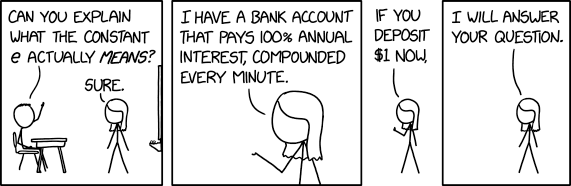 ⌘ Read more
Look Ma: My computer is talking; let’s create a simplified ChatGPT!
ChatGPT is all the hype now, but the math behind it is pretty complex - can we
create something smaller & simpler, possibly under 200 lines of Rust code? ⌘ Read more
↳
In-reply-to
»
Basecamp Details 'Obscene' $3.2 Million Bill That Prompted It To Quit the Cloud
An anonymous reader shares a report: David Heinemeier Hansson, CTO of 37Signals -- which operates project management platform Basecamp and other products -- has detailed the colossal cloud bills that saw the outfit quit the cloud in October 2022. The CTO and creator of Ruby On Rails did all the sums and came up with an e ... ⌘ Read more
⤋ Read More
So… Just out of curiosity (again), back of paper napkin math. Based on Vultr pricing, running my infra in the “Cloud”™ would cost me upwards of $1300 per month. That’s about ~10x more than my current power bill for my entire household 😅 (10 VMs of around ~4 vCPUS and 4-6GB of RAM each + 10TB of storage on the NAS)
Euler Diagrams
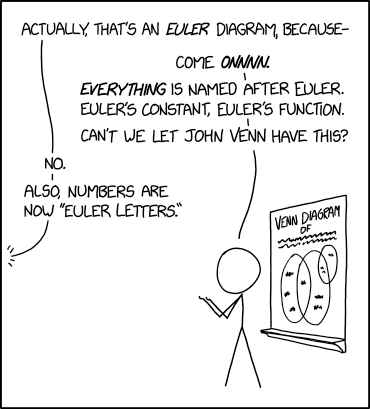 ⌘ Read more
The Universe by Scientific Field
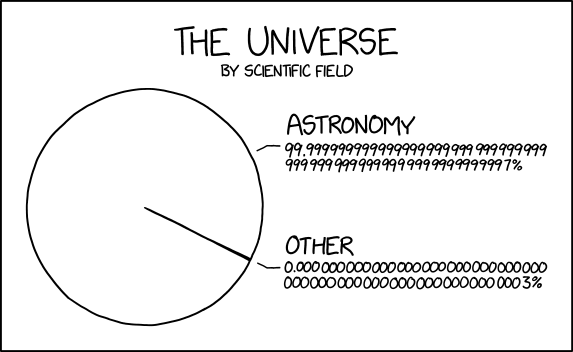 ⌘ Read more
appml/neutrinote
neutriNote - Markdown + Math in Just 3 MB!
Language: Java
Star: 130
Watch: 130 ⌘ Read more
Math support in Markdown
Mathematical expressions are key to information sharing amongst engineers, scientists, data scientists, and mathematicians. Today we are pleased to announce that math expressions can be rendered in Markdown on GitHub using $$ as a delimiter for code blocks with math content or the $ delimiter for inline math expressions. ⌘ Read more
Assigning Numbers
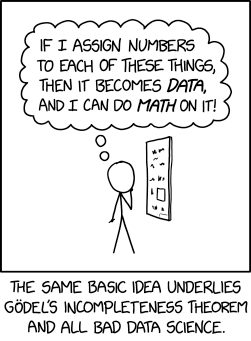 ⌘ Read more
Weird Unicode Math Symbols
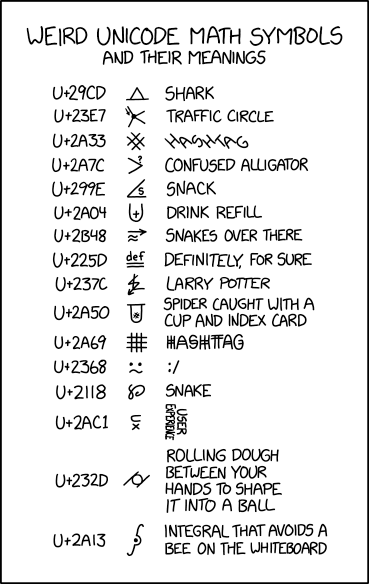 ⌘ Read more
Mozilla responds to Google Chrome version 100 by releasing Firefox version “1,000,000”
“You just got mathed, Google.” ⌘ Read more
A person’s feelings don’t have one answer like a math problem. Fantasy and Love: Mischievous Kiss Quotes | Korean Drama Quotes
@niplav@niplav.github.io “adrationalism” is probably better. “irrationalism” sounds like a pie-appreciation club for math nerds.
New repository: aquilax/zadachko - Math template test generator.
being able to render TeX math equations to PNG files is pretty empowering, because it allows me to write about more technical things here that would otherwise be more difficult to communicate in plaintext.
When I read this I see a a niche, super premium hardware company that managed to acquire tens of thousands of customers by word of mouth. Not only that, their customers are all in-effect self employed or small businesses with huge average revenue per employee. They manage global supply chains, intense competition, all while taking on and managing huge legal/compliance risk. How is is that supposedly “dumb,” criminals can do this, and yet many of us are stretching our intellectual capacities to learn new technologies and maths, developing our nth stupid app, trying to achieve a fraction of the customer traction and revenue that street thugs manage to do every day. Are these people much smarter than average, or does it mean that if you sell something people actually want, literally nothing else matters about your intelligence, education, character, background, or anything at all. When I read these drug stories, it just reinforces for me that growth solves everything. You can succeed with a crew of violent, drug addicted idiots whose only reliable characteristic is short term thinking, and who spend half their time in prison if you have product market fit. What I’m beginning to think is that the “smarter,” people are in a company, the less anyone will want their product. It’s like the success of a venture is inversely proportional to the number of ostensible geniuses it employs. reply How Police Secretly Took over a Global Phone Network for Organized Crime | Hacker News
Video on eqn: Formatting Math and Statistics in groff and troff ⌘
Posted to Entropy Arbitrage: Colors for Programmers https://john.colagioia.net/blog/2020/03/11/colors.html #techtips #programming #design #color #format #math
Posted to Entropy Arbitrage: Happy (Orthodox?) Pi Day, Tomorrow! https://john.colagioia.net/blog/2020/03/04/pi.html #holiday #math #dissent #pi #radix #programming #techtips
📚 Finished reading A Mind for Numbers: How to Excel at Math and Science (Even If You Flunked Algebra) by Barbara Oakley
Nice explanation of the difference between 1/0 and 0/0: https://blog.plover.com/math/division-by-zero.html
A Feud Between Two Popular Statisticians, Nassim Taleb and Nate Silver, on Election Forecasting http://nautil.us/blog/nassim-talebs-case-against-nate-silver-is-bad-math
I think DEVO might have got their math wrong in We’re Through Being Cool. Have I met 2 dozen members of any social group? That’s like 20% of my dunbar allocation.
@adiabetic@www.frogorbits.com You can’t argue with math. My math told me to eat a Balisto.
@adiabetic@www.frogorbits.com You can’t argue with math. My math told me to eat a Balisto.
I did math. The math told me to eat more protein, so I had a whey-and-milk shake with vanilla extract and honey.
This is math-heavy but the idea that ‘keys are meta-taxonomic dimensions’ reminds me of ZigZag & other elements make me think of parallel prolog-likes like mycroft – should re-read carefully later: http://www.vpri.org/pdf/m2009002_qod.pdf
Topology of Numbers http://pi.math.cornell.edu/~hatcher/TN/TNpage.html
Sci-Fi Writer Greg Egan and Anonymous Math Whiz Advance Permutation Problem | Quanta Magazine https://www.quantamagazine.org/sci-fi-writer-greg-egan-and-anonymous-math-whiz-advance-permutation-problem-20181105/
Hackers figure out how to inject 𝑖-likes and the algorithms are high on complex math for days before the network’s developers even figure out the problem↵#invisiblenetworks (day 20)
Lost in Math: Beauty != truth | Ars Technica https://arstechnica.com/science/2018/04/lost-in-math-beauty-truth/
Mathematical Illustrations http://www.math.ubc.ca/~cass/graphics/manual/
Band name of the day: moon math
Band name of the day: math not politics
How to Read Mathematics http://www.people.vcu.edu/~dcranston/490/handouts/math-read.html
GitHub - Jam3/math-as-code: a cheat-sheet for mathematical notation in code form https://github.com/Jam3/math-as-code
200 Terabyte Proof Demonstrates the Potential of Brute-Force Math - Motherboard https://motherboard.vice.com/en_us/article/padnvm/200-terabyte-proof-demonstrates-the-potential-of-brute-force-math
A Path Less Taken to the Peak of the Math World | Quanta Magazine https://www.quantamagazine.org/a-path-less-taken-to-the-peak-of-the-math-world-20170627/
we compress ideas and history into narratives because they become legible this way.↵↵math is a narrative for truth
The pyramid is a known and effective leyline focus. But only recently, its math has become tractable and simulations have found new shapes:
avoids most of the icky math that underlies actual crypto, so it is no reader kryptonite. and different enough to not be cyberpunk pastiche.
📚 Finished reading Thinking In Numbers: On Life, Love, Meaning, and Math by Daniel Tammet