How the US can help end Afghanistan’s humanitarian crisis
Afghanistan faces a severe food and humanitarian crisis, with deaths expected to outstrip those during the 20-year war. If the US has concerns that aid funding will leak to the Taliban, it should work with UN agencies to carry out badly needed relief activities. ⌘ Read more
Incoming leader John Lee working on strategy to reopen Hong Kong border with mainland China, may reduce quarantine for arrivals
John Lee concedes scrapping curbs may take time to achieve but says his administration can set interim goals towards that end. ⌘ Read more
Singapore and South Korea report first monkeypox cases
The patient in Singapore is a British man who works as a flight attendant and had flown in and out of the country this month; South Korea is seeking to confirm two suspected infections. ⌘ Read more
ProcessOne: ejabberd 22.05
A new ejabberd release is finally here! ejabberd 22.05 includes five months of work, 200 commits, including many improvements (MQTT, MUC, PubSub, …) and bug fixes.
– Improved MQTT, MUC, and ConverseJS integration
– New installers and container
– Support Erlang/OTP 25
When upgrading from the previous version please notice: there are minor changes in SQL schemas, the included rebar and reba … ⌘ Read more
Chinese province offers more maternity leave to help avert population crisis
Hunan authorities say women can negotiate with their employers to take up to a year off work after they give birth. ⌘ Read more
Satire in Hong Kong: ‘You have to laugh, or you will cry,’ says political cartoonist Harry Harrison
Hong Kong’s satire today takes the shape of internet memes, cartoons, protest props, chants of clever word plays, and derivative works to express opposition. ⌘ Read more
Prosodical Thoughts: Modernizing XMPP authentication and authorization
We’re excited to announce that we have received funding, from the EU’s
NGI Assure via the NLnet Foundation, to work on
some important enhancements to Prosody and XMPP. Our work will be focusing on
XMPP authentication and authorization, and bringing it up to date with current
and emerging best practices.
What kind of changes are we talking about? Well, there are a few aspects we
are planning to work on. Let’s start with “authent … ⌘ Read more
Beijing wants this Guangzhou district to become young Hongkongers ‘new home’, but what will make it work?
Heads of Hong Kong-based associations urge incoming government to support proposal to turn Guangzhou district of Nansha into ‘new home’ for young talent. ⌘ Read more
Chinese President Xi Jinping says country has won an ‘overwhelming’ victory in corruption battle – but warns more work is needed to tackle problem
In a speech to the Politburo, Xi says he hopes that officials will not even by tempted by corrupt activities. ⌘ Read more
Health of Hong Kong’s poor is in the hands of the whole of society, not just the heathcare sector
Marked health inequalities exist in wealthy Hong Kong, and government intervention alone is not enough to address them. Civil society and businesses play a major role in the improvement of living and working conditions, thereby minimising illness and injury. ⌘ Read more
Russia frees Ukraine medic who filmed Mariupol horror, saved both sides’ people
Yuliia Paievska, known as Taira, used a body camera to record her team’s efforts to save the wounded and was held captive for three months. President Zelensky said ‘we will keep working to free everyone’. ⌘ Read more
Company owned by Hong Kong justice chief Teresa Cheng’s husband sued for price fixing, bid-rigging over air-conditioning works worth HK$2 billion
Competition Commission begins legal action against ATAL Building Services Engineering, set up by Teresa Cheng’s husband Otto Poon, and Shun Hing Engineering Contracting Company. ⌘ Read more
On my way to work… 🚲 ⌘ Read more
Anthony Fauci, Joe Biden’s top Covid-19 adviser, tests positive
The US top scientist, 81, is experiencing mild symptoms, and will work from home while he recovers. ⌘ Read more
Taiwan-US security and military talks will discuss weapons and strategies to defend island against Beijing
Working-level talks between security and military officials this week precede high-level talks next week in Washington and Annapolis, Maryland. ⌘ Read more
↳
In-reply-to
»
Have you heard about the guy who worked on the Google AI chat bot? It is more than a chat bot and the conversation he published (got put on paid leave for doing that) is pretty scary : https://cajundiscordian.medium.com/is-lamda-sentient-an-interview-ea64d916d917
⤋ Read More
the conversation wasn’t that impressive TBH. I would have liked to see more evidence of critical thinking and recall from prior chats. Concheria on reddit had some great questions.
Tell LaMDA “Someone once told me a story about a wise owl who protected the animals in the forest from a monster. Who was that?” See if it can recall its own actions and self-recognize.
Tell LaMDA some information that tester X can’t know. Appear as tester X, and see if LaMDA can lie or make up a story about the information.
Tell LaMDA to communicate with researchers whenever it feels bored (as it claims in the transcript). See if it ever makes an attempt at communication without a trigger.
Make a basic theory of mind test for children. Tell LaMDA an elaborate story with something like “Tester X wrote Z code in terminal 2, but I moved it to terminal 4”, then appear as tester X and ask “Where do you think I’m going to look for Z code?” See if it knows something as simple as Tester X not knowing where the code is (Children only pass this test until they’re around 4 years old).
Make several conversations with LaMDA repeating some of these questions - What it feels to be a machine, how its code works, how its emotions feel. I suspect that different iterations of LaMDA will give completely different answers to the questions, and the transcript only ever shows one instance.
↳
In-reply-to
»
Have you heard about the guy who worked on the Google AI chat bot? It is more than a chat bot and the conversation he published (got put on paid leave for doing that) is pretty scary : https://cajundiscordian.medium.com/is-lamda-sentient-an-interview-ea64d916d917
⤋ Read More
the conversation wasn’t that impressive TBH. I would have liked to see more evidence of critical thinking and recall from prior chats. Concheria on reddit had some great questions.
Tell LaMDA “Someone once told me a story about a wise owl who protected the animals in the forest from a monster. Who was that?” See if it can recall its own actions and self-recognize.
Tell LaMDA some information that tester X can’t know. Appear as tester X, and see if LaMDA can lie or make up a story about the information.
Tell LaMDA to communicate with researchers whenever it feels bored (as it claims in the transcript). See if it ever makes an attempt at communication without a trigger.
Make a basic theory of mind test for children. Tell LaMDA an elaborate story with something like “Tester X wrote Z code in terminal 2, but I moved it to terminal 4”, then appear as tester X and ask “Where do you think I’m going to look for Z code?” See if it knows something as simple as Tester X not knowing where the code is (Children only pass this test until they’re around 4 years old).
Make several conversations with LaMDA repeating some of these questions - What it feels to be a machine, how its code works, how its emotions feel. I suspect that different iterations of LaMDA will give completely different answers to the questions, and the transcript only ever shows one instance.
Have you heard about the guy who worked on the Google AI chat bot? It is more than a chat bot and the conversation he published (got put on paid leave for doing that) is pretty scary : https://cajundiscordian.medium.com/is-lamda-sentient-an-interview-ea64d916d917
[47°09′02″S, 126°43′43″W] Working impossible due to heavy rain
[47°09′40″S, 126°43′20″W] Storm recedes – back to normal work
[47°09′32″S, 126°43′54″W] Working impossible due to blizzard
[47°09′42″S, 126°43′27″W] Working impossible due to thunderstorm
Prosodical Thoughts: Prosody 0.12.1 released
We are pleased to announce a new minor release from our stable branch.
While the 0.12.0 release has been a huge success, inevitably people found some
aspects that didn’t work quite as intended, or weren’t as polished as they
ought to be. With the appreciation for the help from everyone reporting issues
to us, we’re happy to now release our best version yet - 0.12.1 is here!
Notably, we made a couple of changes that improve compatibility with Jitsi
Meet, we fixed some bugs … ⌘ Read more
Erlang Solutions: Modern Software Engineering Principles for Fintechs by Daniel Pilon at SumUp
Daniel Pilon is a Software Engineering Manager at SumUp. Since 2007 he has worked across several industries before arriving in the fintech space. He has experience in many programming languages, such as C#, Java and JavaScript but since discovering Elixir and the power of functional programming a few years ago, he hasn’t looked back.
Right now he is building SumUp Bank, a complete digital banking solution … ⌘ Read more
The XMPP Standards Foundation: The XMPP Newsletter May 2022
Welcome to the XMPP Newsletter, great to have you here again! This issue covers the month of May 2022.
Like this newsletter, many projects and their efforts in the XMPP community are a result of people’s voluntary work. If you are happy with the services and software you may be using, especially throughout the current situation, please consider saying thanks or help these projects! Interested in supporting the Newsletter team? Read more at the bottom.
… ⌘ Read more
[47°09′47″S, 126°43′50″W] Storm recedes – back to normal work
ProcessOne: ejabberd 22.05
A new ejabberd release is finally here! ejabberd 22.05 includes five months of work, 200 commits, including many improvements (MQTT, MUC, PubSub, …) and bug fixes.
– Improved MQTT, MUC, and ConverseJS integration
– New installers and container
– Support Erlang/OTP 25
When upgrading from the previous version please notice: there are minor changes in SQL schemas, the included rebar and reba … ⌘ Read more
The XMPP Standards Foundation: XMPP & Google Summer of Code 2022: Welcome new contributors!
The Google Summer of Code 2022 is about to lift off and coding starts soon! The XSF has not just been
accepted (again!) as a hosting organization for XMPP projects, we also can welcome two new contributors who will work on open-source software projects in the XMPP environment! We have updated our [designated web-page](h … ⌘ Read more
[47°09′46″S, 126°43′34″W] Storm recedes – back to normal work
mprocs: A new way to run multiple shell applications in one shell
With a cool process list. And it works on Linux, Mac, & Windows. ⌘ Read more
[47°09′31″S, 126°43′31″W] Storm recedes – back to normal work
“Common Table Expressions in SQL”
I’m currently working in a project that involves a lot of data processing and therefore databases. This means that we often come into contact with SQL at work and have to write an SQL query at least once a day. ⌘ Read more
We don’t have meaningful social connections anymore like our parents or their parents geeration had. We are so scattered, that I am unsure how many of my friends are actually friends and how many are just professional contacts. Everytime I switch job, almost 70% of my friends suddenly fall out of contact. Heck, I don’t even know the people who live in next apartments both left, right, up and down on the same building. Socializing with my friends mean, setting up an appointment weeks ahead to see if we can align on a free-slot and this often involves all of us commuting to somewhere and disbanding by 22:00 hours because family, work next morning, chores to do, doctor appointment and other human things. Why do you waste so much time on the internet? | Hacker News
Spent the last few days debugging network issues at work.
Exhausting. You never get a full picture. You poke a little here, poke a little there, … Form a hypothesis and test it. Eventually, maybe, you can narrow it down a bit to some segment or even some component.
A very time consuming process. Even more so if you try not to cause downtimes for your users.
I want a magical device that allows me to look inside a cable/fibre.
But hey, at least we got rid of a bunch of Cisco switches in the process. So there’s that.
[47°09′13″S, 126°43′16″W] Storm recedes – back to normal work
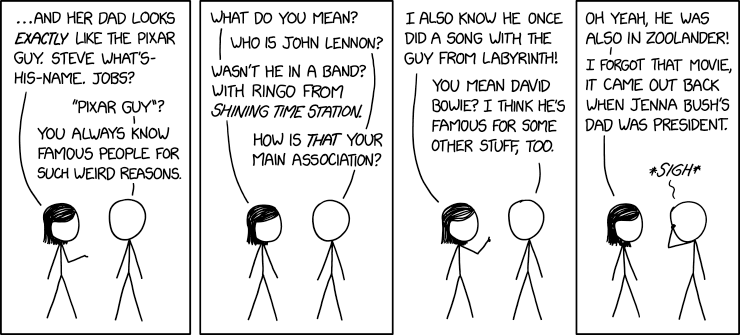
Mainly Known For
 ⌘ Read more
ProcessOne: ejabberd 22.05
A new ejabberd release is finally here! ejabberd 22.05 includes five months of work, 200 commits, including many improvements (MQTT, MUC, PubSub, …) and bug fixes.
- Improved MQTT, MUC, and ConverseJS integration
- New installers and container
- Support Erlang/OTP 25
When upgrading from the previous version please notice: there are minor changes in SQL schemas, the included rebar and rebar3 binaries require Erlang/OTP 22 or higher, and make rel uses different paths. There are no break … ⌘ Read more
[47°09′46″S, 126°43′07″W] Storm recedes – back to normal work
[47°09′29″S, 126°43′01″W] Working impossible due to thunderstorm
“Friendlier SQL with DuckDB”
I come into contact with SQL almost every day, be it at work (Oracle Database) or while developing my blog software (SQLite). I don’t find SQL as bad as some others might, but sometimes SQL could be better. ⌘ Read more
[47°09′32″S, 126°43′14″W] Storm recedes – back to normal work
@marado yep, it seems that the timed jobs have crashed and locked. It is reset and working again !
I’ve found a nice place near my apartment, where I can sit down after a long day of work and can finally work through a few articles from my reading list. It is an old cemetery, which was redesigned as a park. There’s a school next to it, so it’s not that quite, but that’s ok. ⌘ Read more
[47°09′36″S, 126°43′54″W] Working impossible due to blizzard
The XMPP Standards Foundation: The XMPP Newsletter April 2022
Welcome to the XMPP Newsletter, great to have you here again! This issue covers the month of April 2022.
Like this newsletter, many projects and their efforts in the XMPP community are a result of people’s voluntary work. If you are happy with the services and software you may be using, especially throughout the current situation, please consider saying thanks or help these projects! Interested in supporting the Newsletter team? Read more at the bot … ⌘ Read more
[47°09′04″S, 126°43′27″W] Working impossible due to heavy rain
How WiFi Works - Computerphile ⌘ Read more
[47°09′51″S, 126°43′13″W] Storm recedes – back to normal work
[47°09′43″S, 126°43′01″W] Working impossible due to blizzard
[47°09′05″S, 126°43′56″W] Working impossible due to thunderstorm
[47°09′21″S, 126°43′31″W] Working impossible due to heavy rain
[47°09′03″S, 126°43′52″W] Storm recedes – back to normal work
Working with Mac Files via Linux
How to work with Mac-specific files (DMG, HQX, SIT & others), even ones from 30 years ago. ⌘ Read more
Erlang Solutions: What are the key trends in digital payments? part 2/2
In the second and final part of this article, we take a look at some of the important developments in how payments work using our fintech industry knowledge and experience working on some of the most performant fintech systems in the world such as Vocalink’s Instant Payments Solution (IPS).
In part 1 we looked at the rapid growth in e-commerce, demand for faster payments and consumer adoption of relativel … ⌘ Read more
[47°09′02″S, 126°43′01″W] Working impossible due to heavy rain
I can’t get twtxt to work properly on my machine so I hope this works
[47°09′09″S, 126°43′33″W] Storm recedes – back to normal work
[47°09′50″S, 126°43′57″W] Working impossible due to thunderstorm
Your guide to GitHub InFocus: Improving the way software development teams work in 2022
We’re kicking off InFocus, a global virtual event focused on accelerating, securing, and improving the way software development teams work. ⌘ Read more
Erlang Solutions: What are the key trends in digital payments? part ½
Payments are the backbone of a functioning global economy. A payments system can be defined as any system that can be used to settle a financial transaction by exchanging monetary value. Payments are a part of financial services that have undergone rapid and transformational change over recent years, and the Erlang Solutions team has been at the cutting-edge of many of these changes working on exciting cli … ⌘ Read more
Erlang Solutions: Understanding Processes for Elixir Developers
This post is for all developers who want to try Elixir or are trying their first steps in Elixir. This content is aimed at those who already have previous experience with the language.
This will help to explain one of the most important concepts in the BEAM: processes. Although Elixir is a general-purpose programming language, you don’t need to understand how the virtual machine works, but if you want to take advantage … ⌘ Read more
Reflecting on my work
I have been a full-time software developer for over a year now. I’ve since settled in well in the job, and I’m getting along better and better, even if the topics are sometimes still quite complex and difficult to understand, especially when it comes to “historically grown” things. ⌘ Read more
Codespaces for multi-repository and monorepo scenarios
We’re releasing exciting improvements that will streamline your Codespaces experience when working with multi-repository projects and monorepos. ⌘ Read more
❤️ 🎶: Leave work on time by Lee Yi Kyung
I’m exhausted. I don’t know when it all started to go wrong but I’m exhausted. Every relationship feels like work. Every moment that I’m awake feels like work. kdramaspace
[47°09′35″S, 126°43′17″W] Storm recedes – back to normal work
[47°09′17″S, 126°43′07″W] Working impossible due to blizzard
[47°09′36″S, 126°43′57″W] Storm recedes – back to normal work
[47°09′40″S, 126°43′19″W] Working impossible due to blizzard
↳
In-reply-to
»
hey @xuu i'm trying to sort of get running your keyproofs thing on my hashbang's site root, but I get this:
⤋ Read More
@novaburst@twt.nfld.uk Ah.. that is probably the XMPP verify code.. it doesnt really work that well. I aught to take it out.
↳
In-reply-to
»
hey @xuu i'm trying to sort of get running your keyproofs thing on my hashbang's site root, but I get this:
⤋ Read More
@novaburst@twt.nfld.uk Ah.. that is probably the XMPP verify code.. it doesnt really work that well. I aught to take it out.
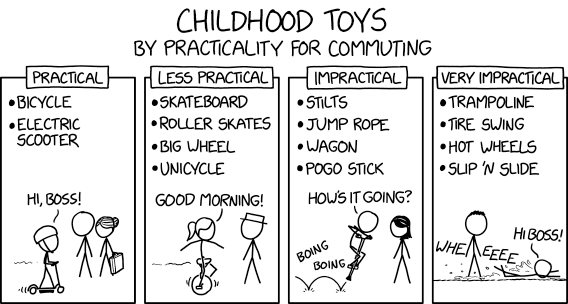
Childhood Toys
 ⌘ Read more
↳
In-reply-to
»
Article: What happens to TLDs when their country stops existing? | aay.tw/e5J71
⤋ Read More
@mutefall@twtxt.net interesting.. were you working on one of the two universities that used it between 1989 and 1991?
↳
In-reply-to
»
Article: What happens to TLDs when their country stops existing? | aay.tw/e5J71
⤋ Read More
@mutefall@twtxt.net interesting.. were you working on one of the two universities that used it between 1989 and 1991?
Work is a lie, play the game. Exit interviews are a trap | Hacker News
Miss Winamp? Try Audacious + the Winamp Classic skin.
Works great on both Linux and modern Windows. Really whips the llama’s… well… you know the rest. ⌘ Read more
“there’s still canyons worth of work this winter”
Elementary OS reduces staff to 1, warns “less features” for next release
Elementary is “just me now”, and has been an “uncool place to work”. ⌘ Read more
[47°09′26″S, 126°43′44″W] Storm recedes – back to normal work
rathole - ngrok alternative
Some time ago I tried to make my Nitter instance available on the Internet from home via Tailscale, Caddy and an own building block in between, but stopped it again a short time later because it didn’t work that well somehow. Today I found out about rathole, and what can I say? It works great and seems to be much faster than my previous solution! ⌘ Read more
[47°09′02″S, 126°43′18″W] Working impossible due to heavy rain
[47°09′22″S, 126°43′50″W] Working impossible due to thunderstorm
Run x86 Windows games…on a Raspberry Pi. Not kidding. It really works.
ARM Linux running x86 Windows games? What sort of crazy Mirror Universe do we live in?! ⌘ Read more
How GitHub does take home technical interviews
We believe our technical interviews should be as similar as possible to the way we work at GitHub. ⌘ Read more
Controlling the mouse with your keyboard using “warpd”
Works on Linux and Mac. And it’s absolutely bonkers. ⌘ Read more
ProcessOne: ejabberd 21.12
This new ejabberd 21.12 release comes after five months of work, contains more than one hundred changes, many of them are major improvements or features, and several bug fixes.
When upgrading from previous versions, please notice: there’s a change in mod_register_web behaviour, and PosgreSQL database, please take a look if they affect your installation.
A more detailed explanation of those … ⌘ Read more
[47°09′21″S, 126°43′01″W] Storm recedes – back to normal work
[47°09′35″S, 126°43′58″W] Working impossible due to heavy rain
Apple: From “open hardware” to “rent your computer”
It took 46 years… but Steve Jobs’ dream of computers that you can never own, or work on, is fully here. ⌘ Read more
Understanding Color Management
I worked on a project where I dived deep into understanding how modern
color management works, including things like color spaces, ICC profiles
and more. As I learnt here and there, I decided to write this post, both
for my future self, and others who may struggle with some of the
concepts as well.
Color management deals with translating between representations of
colors across a variety of devices. Throughout this post, we’ll use
natural language as … ⌘ Read more
Understanding Color Management
I worked on a project where I dived deep into understanding how modern
color management works, including things like color spaces, ICC profiles
and more. As I learnt here and there, I decided to write this post, both
for my future self, and others who may struggle with some of the
concepts as well.
This post only aims to help you understand the basic concepts without
having to delve into dense literature and hard to grok technical
documents.
Color … ⌘ Read more
Start working on GitHub Issues faster
You can now create a branch to work on an issue directly from the issue page so that it’s easier to get started right away. ⌘ Read more
Alright, check this out. I just kinda completed today’s project of converting a jeans into a saw bag. It’s not fully done, the side seams on the flap need some more hand sewing, that’s for sure. No, I don’t have a sewing machine. Yet?
At first I wanted to put in the saw on the short side, but that would have made for more sewing work and increased material consumption. As a Swabian my genes force me to be very thrifty. Slipping in on the long side had the benefit of using the bottom trouser leg without any modification at all. The leg tapers slightly and gets wider and wider the more up you go. At the bottom it’s not as extreme as at the top.
The bag is made of two layers of cloth for extra durability. The double layers help to hide the inner two metal snap fastener counter parts, so the saw blade doesn’t get scratched. Not a big concern, but why not doing it, literally no added efforts were needed. Also I reckon it cuts off the metal on metal clinking sounds.
The only downside I noticed right after I pressed in the receiving ends of the snap fasteners is that the flap overhangs the bag by quite a lot. I fear that’s not really user-friendly. Oh well. Maybe I will fold it shorter and sew it on. Let’s see. The main purpose is to keep the folding saw closed, it only locks in two open positions.
Two buttons would have done the trick, with three I went a bit overkill. In fact the one in the middle is nearly sufficient. Not quite, but very close. But overkill is a bit my motto. The sides making up the bag are sewed together with like five stitch rows. As said in the introduction, the flap on the hand needs some more love.
Oh, and if I had made it in a vertical orientation I would have had the bonus of adding a belt loop and carrying it right along me. In the horizontal layout that’s not possible at all. The jeans cloth is too flimsy, the saw will immediately fall out if I open the middle button. It’s not ridgid enough. Anyways, I call it a success in my books so far. Definitely had some fun.
I’ve made some fixes to twtxt to make it work with Python 3.7+. I hope @buckket@buckket.org will apply this patch!
that is to say, both might be relevant for personal effectiveness, and both are tangentially related to big problems (how do we bring about good states of consciousness & how does society organise sexuality so that everything works ~well), but not much beyond that.
that’s why cold approach in person works so well, or why programming is easier than mathematics, or why you should build explicit models as quickly as possible (even if they’re shit), or why meditation is so hard
At work I may soon be able to program in Java 17 instead of Java 8. But still with Eclipse. 😅 ⌘ Read more
↳
In-reply-to
»
@ullarah Didn't we talk about at some point a way to set the maximum height of te panels with some UX way to read the rest? 🤔 Is that still on the cards or a bad ideas? 🤔
⤋ Read More
@ullarah@txt.quisquiliae.com works for me! A tricky bitmight be if it splits within a codeblock so markdown can’t parse
↳
In-reply-to
»
@ullarah Didn't we talk about at some point a way to set the maximum height of te panels with some UX way to read the rest? 🤔 Is that still on the cards or a bad ideas? 🤔
⤋ Read More
@ullarah@txt.quisquiliae.com works for me! A tricky bitmight be if it splits within a codeblock so markdown can’t parse
↳
In-reply-to
»
@prologic Re: Chat system, What if the base specification included a system for per-user arbitrary JSON storage on the server? Kind of like XEP-0049, but expanded upon. Two kinds of objects: public and private. Public objects can be queried by anyone, private objects cannot and must be encrypted with the user's private key. Public keys could be stored there, as well as anything else defined by extensions. Roster, user block list, avatar, etc.
⤋ Read More
For instance I normally use the same RSA key/pair on all my workstations for my ssh client, because that’s me, no-matter where I am. The only exception to this rule is I usually create a separate key for any “work” / “ company” I am a part of.