TestArticle_11Apr23
security patching going on ⌘ Read more
I played around with parsers. This time I experimented with parser combinators for twt message text tokenization. Basically, extract mentions, subjects, URLs, media and regular text. It’s kinda nice, although my solution is not completely elegant, I have to say. Especially my communication protocol between different steps for intermediate results is really ugly. Not sure about performance, I reckon a hand-written state machine parser would be quite a bit faster. I need to write a second parser and then benchmark them.
lexer.go and newparser.go resemble the parser combinators: https://git.isobeef.org/lyse/tt2/-/commit/4d481acad0213771fe5804917576388f51c340c0 It’s far from finished yet.
The first attempt in parser.go doesn’t work as my backtracking is not accounted for, I noticed only later, that I have to do that. With twt message texts there is no real error in parsing. Just regular text as a “fallback”. So it works a bit differently than parsing a real language. No error reporting required, except maybe for debugging. My goal was to port my Python code as closely as possible. But then the runes in the string gave me a bit of a headache, so I thought I just build myself a nice reader abstraction. When I noticed the missing backtracking, I then decided to give parser combinators a try instead of improving on my look ahead reader. It only later occurred to me, that I could have just used a rune slice instead of a string. With that, porting the Python code should have been straightforward.
Yeah, all this doesn’t probably make sense, unless you look at the code. And even then, you have to learn the ropes a bit. Sorry for the noise. :-)
↳
In-reply-to
»
slides/go-generics.md at main - slides - Mills -- I'm presenting this tomorrow at work, something I do every Wednesday to teach colleagues about Go concepts, aptly called
⤋ Read More
go mills() 😅
@chunkimo@twtxt.net lol. go walrus!!
↳
In-reply-to
»
slides/go-generics.md at main - slides - Mills -- I'm presenting this tomorrow at work, something I do every Wednesday to teach colleagues about Go concepts, aptly called
⤋ Read More
go mills() 😅
@chunkimo@twtxt.net lol. go walrus!!
↳
In-reply-to
»
First test post from GTK UI!
⤋ Read More
Moving my source to git today, I have just developed on a local copy until today.
I needed to move it before going too crazy with it. Starting the work on the timeline that I’ve mentioned.
Yesterday I ran out of time, but today I have some free time to work on things. Very pleased with the software already, I know I’ll use it all the time. So today I will work on refreshing the timeline, and then fix so that it’s a bit smarter then now, the class that holds the statuses will also contain the GUI elements for each status, that way I can more easily append new statuses into the timeline - instead of grabbing the whole timeline and rebuild all it’s gui each time it refreshes. I know what to do - so I do not expect it to take too long to fix.
Tailscale · Best VPN Service for Secure Networks - Anyone know anything about Tailscale? Used it? Recommend it? How does it stack up in terms of actual secure networking and VPN access to your infra? Can it be trusted
I notice it uses WirGuard™ and is actually written in Go 😅
↳
In-reply-to
»
First test post from GTK UI!
⤋ Read More
Going out for a hike with the dog. Then I’ll code a bit later today.
Want to fix the timeline refresh, and then create one timeline for each timeline, and buttons to switch between them.
Anyone know of any good, cheap laptops to use for just day-to-day activities (web surfing, sysadmin, web design, etc) that’s not a Chromebook? My Microsoft Surface Go I got some years ago blue screens when I plug it into my dock.
Open to refurbished as well
Hi guys! My first ever Yarn post 😺 📦
I already think I am going to like this better than mastodon. My question is, is this federated… @support@twtxt.net ?? If so I am a lifer. Haha and I’ve been here 5 minutes 💖
I like to occasionally do some graphical artwork from time to time. For the first place to get all my art and other’s too check out XMPP at this address: xmpp:artwork@chat.toofast.vip?join
Another question, is this using markdown for markup? @thecanine@twtxt.net ?? Follow me back mateo! 😎
Im going to fall a sleep standing up tonight it feels like. Holy shit I’m tired today. Just one more day then it’s much needed vacation time.
slides/go-generics.md at main - slides - Mills – I’m presenting this tomorrow at work, something I do every Wednesday to teach colleagues about Go concepts, aptly called go mills() 😅
Tampa Bay seems to be picking up the pace. They beat the Islanders 5-0. Go Lightning!
↳
In-reply-to
»
Posting from c++, fltk GUI.
⤋ Read More
Been going back and forth on the gui, I will move away from FLTK and go for https://www.gtk.org/ instead.
I’ll spend tomorrow working on that. I need a more refreshing GUI then what I have now.
And also FLTK is a pain to get to work as I need - spend the whole afternoon trying to get it to use images (avatar etc) on my linux machine, and no matter what I’ve tried it refuses. So instead of wasting more time battling fltk I will switch to GTK.
not the greatest idea whilst searching for a job, but fuck it. Now I also feel like going for a walk, so win I guess
I wish I was somewhere I could go surfing right now.
Qualifications
 ⌘ Read more
**Now that @JoeSondow’s bot games like @EmojiSnakeGame are no longer going be free to play, I can only hope he will soon have mastodon versions of it running, and I will no longer have a reason to open twitter’s app often.
And no, paying for a verified account is not on the table.**
Now that @JoeSondow’s bot games like @EmojiSnakeGame are no longer going be free to play, I can only hope he will soon have mastod … ⌘ Read more
↳
In-reply-to
»
Posting from c++, fltk GUI.
⤋ Read More
Turns out the problem I had was also there when I build rapidjson from source, but if I moved the include to earlier (rapidjson in my project) - the problem went away, so I suspect it’s the same as in this issue going on.
The cool thing is that the client now works fine on linux without changing anything else then the include order!
So now I’ll do all development there - instead of on windows.
↳
In-reply-to
»
Good morning!
⤋ Read More
@prologic@twtxt.net it was really nice! But also one of the more stressful walks, I had to turn back, because it was so slick on the rock that it was really hard to walk, and I fell once (that rarely happens), and when the dog was going to jump over a big gap in the rock on the trail he got scared, and pulled himself out of the harness and got some minutes of freedom.
There are sheep there too , so I got lucky that he did not go straight to them. Had some snacks in my pocket and got him back with that.
Beautiful spring day today, sun is out, it’s warm. This is going to be really nice!
Good morning to you all! Rain is still poring down, tired of getting wet each time I go outside. heh.
Going to rain all weekend it seems, but then next week it’ll get better. Hoped the rain would stop this weekend, but it seems like it wont.
↳
In-reply-to
»
Media
⤋ Read More
@prologic@twtxt.net thank you :) he’s always happy and ready to go on adventures!
Dahlias go viral as social media makes these classic blooms cool again
From their humble origins as a cottage garden staple, dahlias are experiencing a resurgence in popularity thanks to the power of social media — and James Bond. ⌘ Read more
Weekend is here :)
I want to create a frontpage for my website - https://stigatle.no , fix cmake script for the desktop client and compile it on debian. Other then that I’ll walk the dog as usual and spend quality time with my family. Going to be a great one :)
❤️ 🎶: Time to Go by DooRi
In case you didn’t notice, I deleted my Twitter and Keybase accounts. Going full indieweb.
Flatten the Planets
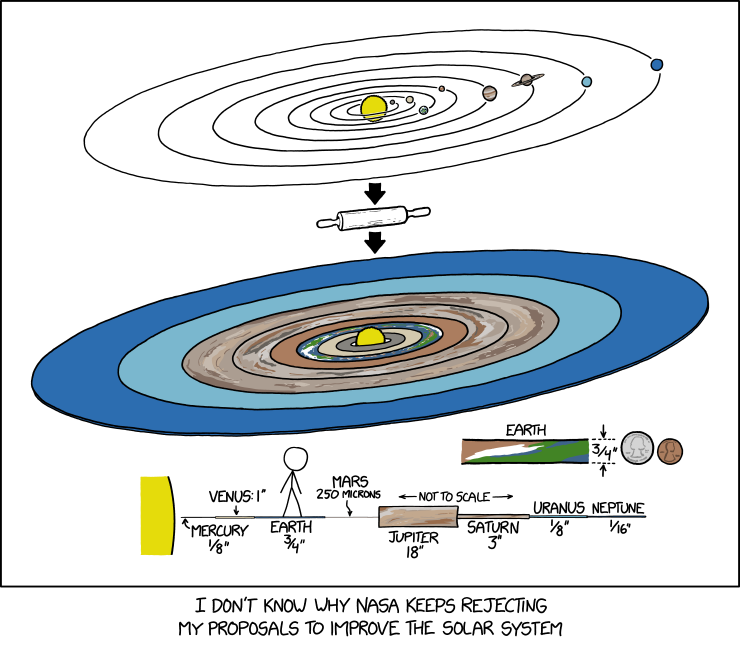 ⌘ Read more
↳
In-reply-to
»
Now tell me how can I prevent
⤋ Read More
monerod from hogging on my CPU. I'm on DragonFly BSD, cpulimit doesn't works, also nice doesn't. I believe this is an IRC question.
Often people run a node somewhere, then connect to it with the remote node feature from other machines. Or use a light wallet.
Cpu use will go down when block chain is synced. Also just a tip - check the prune blockchain feature to save a lot of space.
Lymphocytes
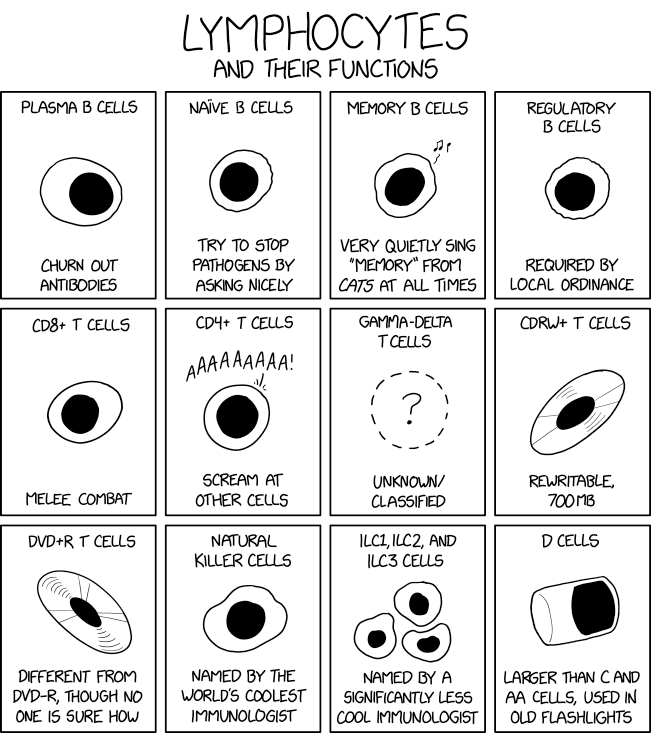 ⌘ Read more
↳
In-reply-to
»
👋 Hey y'all yarners 🤗 -- @darch and I have been discussing in our Weekly Yarn.social call (still ongoing... come join us! 🙏) about the experimental Yarn.social <-> Activity Pub integration/bridge I've been working on... And mostly whether it's even a good idea at al, and if we should continue or not?
⤋ Read More
And mostly whether it’s even a good idea at al, and if we should continue or not?
I think that activitypub in yarn is a great feature! And also one of the easier ones to set up and get going.
And as I said last week - I think it’s a important features - and will drive adoption.
It is optional as well - so if one does not want it - just not turn that feature on.
I personally was missing the fact that I could not easily follow others before you added activitypub, but now I can choose to follow them, which is great.
👋 Hey y’all yarners 🤗 – @darch@neotxt.dk and I have been discussing in our Weekly Yarn.social call (still ongoing… come join us! 🙏) about the experimental Yarn.social <-> Activity Pub integration/bridge I’ve been working on… And mostly whether it’s even a good idea at al, and if we should continue or not?
There are still some outstanding issues that would need to be improved if we continued this regardless
Some thoughts being discussed:
- Yarn.social pods are more of a “family”, where you invite people into your “home” or “community”
- Opening up to the “Fedivise” is potentially “uncontrolled”
- Even at a small scale (a tiny dev pod) we see activities from servers never interacted with before
- The possibility of abuse (because basically anything can POST things to your Pod now)
- Pull vs. Push model polarising models/views which whilst in theory can be made to work, should they?
Go! 👏
↳
In-reply-to
»
Test from ftlk in rust.
⤋ Read More
So, progress is going smooth!
No I have compiled libcurl with openssl, and I fetch token already.
so next is creating three functions - one for posting, one for the login and fetching token (now I have just testing login when application starts), and the fetch the timeline. Then I need the gui.
Progressed faster in 2 hours in c++ then days with rust…
↳
In-reply-to
»
Test from ftlk in rust.
⤋ Read More
Okay, so I spent about one hour setting up cmake, fltk and libcurl for c++, got all that running now.
I still need to fix the cmake script a bit, but I have a working verison now with this.
I will now add the same curl stuff I had in rust in c++, then work on the gui and all that.
So I will drop rust, and go for c++ instead, much easier for me. Was worth a try in rust, but for now that’s not for me to be honest, I much faster and better in c++.
↳
In-reply-to
»
This is the GraphQL compiler complaining right? 🤔
⤋ Read More
@prologic@twtxt.net it is from the generator. But in the actual go implementation methods are represented with a unsigned short. So 65k is the hard limit in go.
↳
In-reply-to
»
This is the GraphQL compiler complaining right? 🤔
⤋ Read More
@prologic@twtxt.net it is from the generator. But in the actual go implementation methods are represented with a unsigned short. So 65k is the hard limit in go.
↳
In-reply-to
»
Test from ftlk in rust.
⤋ Read More
Found what I needed finally.. I now created a struct with this crate:
https://crates.io/crates/arraystring
That works for what I need, damn this has been annoying to find a solution too.
I can now store the strings I need in the struct, and use that in all the functions.
Also works with the GUI callback stuff, so it solves the Issue I’ve been having.
I have now added gui elements for server url, username, password.
And functions for fetching the timeline with the supplied info.
So now I can finally start working on the timeline GUI.
It’s been in a way easier then expected, but also somethings are a bit tricky.
I could easily have done the same in c++ much faster, but the whole point here was to learn more rust.
And for that it’s been going well.
Oof.

Oof.
↳
In-reply-to
»
Oof. I would usually go straight to sleep after putting the little one to sleep but here I am, awake and twting. Time to do one of the many things on my list to make me feel like I’m accomplishing something with my spare time
⤋ Read More
@screem@twtxt.net nice! keep going at it!
Oof. I would usually go straight to sleep after putting the little one to sleep but here I am, awake and twting. Time to do one of the many things on my list to make me feel like I’m accomplishing something with my spare time
Can We Make Bicycles Sustainable Again?
Cycling is the most sustainable form of transportation, but the bicycle is becoming increasingly damaging to the environment. The energy and material used for its production go up while its life expectancy decreases. ⌘ Read more
↳
In-reply-to
»
So. this post should show up on mastodon! :)
⤋ Read More
@bender@twtxt.net hehe!
The cool thing is that it worked just fine on my VPS at least, so this is going to be nice!
Yarn is by far my favorite social media, and even more now with the feediverse stuff that’s coming along.
What do you all think about the UFO thing going on?
Do you believe some of them are aliens? (tictac \ go-fast etc)?
Do you think some government have a real UFO stashed away somewhere?
getting a new phone soon. Ill go for a iphone 14 this time. I have always had android, but Im a bit tired of it now to be honest, want something else. I will get the standard model. the others are way too expensive. I use it mostly for photos, so I hope its good (either way it’ll be better then what I have now).
tonight Im going to tinker a bit with my Mangopi riscv board. runs debian. I want to update it and install some new stuff on it.
On that note, I think I’m going to bed 😴
Okay one last time, then I’m going to bed, let’s hope this is the final bug that fixes Yarn/Twtxt <-> Activity Pub integration 😅
↳
In-reply-to
»
Good morning! Wish you all a great day!
⤋ Read More
@prologic@twtxt.net doing fine, the dily grind. But look forward to the weekend, going to a indoor trampoline park with my kids, and weather is going to be nice (not rain) as well, so Ill try and get on a hike with them as well, have a fire, cook some food and just enjoy being out in the forest :)
Nice, the number of GoBlog users is growing! 🤓 The next step is a growing number of GoBlog developers. It would be great to have more people giving advice on how to improve the code. 😅 Any senior Go devs out there? ⌘ Read more
** Accessibility updates **
I’m feeling pretty chuffed! Last week I wrote about my intention to make this website more accessible. My motivations were many-fold, but, primarily, mostly shame. I’ve worked as an accessibility specialist in the past, and now spend a bunch of my days at work looking for ways to make public infrastructure online more accessible. It seemed fitting to at least make sure the little bit I contribute to the web here is also accessible.
I thought it was going t … ⌘ Read more
today we went and played some football together and went to the park.
later Ill take the dog to the dogpark, some bigger dogs are going there later today, so that’ll be fun for Nanook. other then that we’ll have nachos tonight, and saturday candy plus a movie :) going to be a nice day!
↳
In-reply-to
»
On the topic of Programming Languages and Telemetry. I'm kind of curious... Do any of these programming language and their toolchains collect telemetry on their usage and effectively "spy" on your development?
⤋ Read More
@prologic@twtxt.net I get the worry of privacy. But I think there is some value in the data being collected. Do I think that Russ is up there scheming new ways to discover what packages you use in internal projects for targeting ads?? Probably not.
Go has always been driven by usage data. Look at modules. There was need for having repeatable builds so various package tool chains were made and evolved into what we have today. Generics took time and seeing pain points where they would provide value. They weren’t done just so it could be checked off on a box of features. Some languages seem to do that to the extreme.
Whenever changes are made to the language there are extensive searches across public modules for where the change might cause issues or could be improved with the change. The fs embed and strings.Cut come to mind.
I think its good that the language maintainers are using what metrics they have to guide where to focus time and energy. Some of the other languages could use it. So time and effort isn’t wasted in maintaining something that has little impact.
The economics of the “spying” are to improve the product and ecosystem. Is it “spying” when a municipality uses water usage metrics in neighborhoods to forecast need of new water projects? Or is it to discover your shower habits for nefarious reasons?
↳
In-reply-to
»
On the topic of Programming Languages and Telemetry. I'm kind of curious... Do any of these programming language and their toolchains collect telemetry on their usage and effectively "spy" on your development?
⤋ Read More
@prologic@twtxt.net I get the worry of privacy. But I think there is some value in the data being collected. Do I think that Russ is up there scheming new ways to discover what packages you use in internal projects for targeting ads?? Probably not.
Go has always been driven by usage data. Look at modules. There was need for having repeatable builds so various package tool chains were made and evolved into what we have today. Generics took time and seeing pain points where they would provide value. They weren’t done just so it could be checked off on a box of features. Some languages seem to do that to the extreme.
Whenever changes are made to the language there are extensive searches across public modules for where the change might cause issues or could be improved with the change. The fs embed and strings.Cut come to mind.
I think its good that the language maintainers are using what metrics they have to guide where to focus time and energy. Some of the other languages could use it. So time and effort isn’t wasted in maintaining something that has little impact.
The economics of the “spying” are to improve the product and ecosystem. Is it “spying” when a municipality uses water usage metrics in neighborhoods to forecast need of new water projects? Or is it to discover your shower habits for nefarious reasons?
↳
In-reply-to
»
Any good ideas on how to maintain ~/go/pkg/mod and to remove old garbage?
⤋ Read More
@prologic@twtxt.net the rm -rf is basically what go clean -modcache does.
I think you can use another form that will remove just the deps for a specific module. go clean -r
↳
In-reply-to
»
Any good ideas on how to maintain ~/go/pkg/mod and to remove old garbage?
⤋ Read More
@prologic@twtxt.net the rm -rf is basically what go clean -modcache does.
I think you can use another form that will remove just the deps for a specific module. go clean -r
Any good ideas on how to maintain ~/go/pkg/mod and to remove old garbage?
↳
In-reply-to
»
I bought a 256GB usb a couple of weeks ago, I now want a OS on it with persistent storage.
I only have 1 drive on my newest laptop at the moment, so I do not want to dualboot and such, so a os on the usb stick is a nice option.
Tonight I'm testing NomadBSD - https://nomadbsd.org/index.html
Will flash it in a couple of minutes, hope it boots fine with my hardware.
⤋ Read More
It booted fine! currently creating partitions etc. I like that you could enable encryption. when its done I’ll go through my usual routine and set up all development tools etc and get some stuff compiled.
** week notes **
It got a wee bit cold here in Maine this weekend. It was thankfully uneventful for us. We hung around inside and watched it get real cold outside. Our home faired pretty well, too. Honestly pleasantly surprised about that!
We picked this weekend to go all in on potty training — pantsless days, treats, rousing bouts of encouragement sung, and a lot of spot cleaning. Fueled by hubris, I thought we had this potty trainin … ⌘ Read more
↳
In-reply-to
»
At least I started on something today. Been months and months since I did anything. I started on a asset I want to use in a short I want to make some day.
Not done yet at all, but blocking things out just so I get a feel for it.
⤋ Read More
@prologic@twtxt.net going to be a huge radio telescope. qorking on various scifi assets.
Sam Whited: Places to Go
This is a love letter to many places, among them:
- Triple Step Studios,
- Smyrna, and Cobb County public libraries and parks,
- Sopo Bicycle Co-op and the Austin Yellow Bike Project,
- and AtlantaCritical Mass.
Dear comra … ⌘ Read more
What’s with all these tech companies going through massive layoffs. The latest one is Intel, but instead they’re cutting salaries to avoid laying off.
hack lab now on legit at hacklab.nilfm.cc; all go modules bumped
❤️ 🎶: Never Let You Go (電視劇《我只喜歡你》片尾曲) by 薩吉
↳
In-reply-to
»
I've never liked the idea of having everything displayed all of the time for all of history.
⤋ Read More
@eldersnake@we.loveprivacy.club Several reasons:
- It’s another language to learn (SQL)
- It adds another dependency to your system
- It’s another failure mode (database blows up, scheme changes, indexs, etc)
- It increases security problems (now you have to worry about being SQL-safe)
And most of all, in my experience, it doesn’t actually solve any problems that a good key/value store can solve with good indexes and good data structures. I’m just no longer a fan, I used to use MySQL, SQLite, etc back in the day, these days, nope I wouldn’t even go anywhere near a database (for my own projects) if I can help it – It’s just another thing that can fail, another operational overhead.
↳
In-reply-to
»
Gonna buy some firewood today, to use in our firepit, love sitting outside late - make some good food for my kids on the fire, then just sit and talk and have fun, look at the stars etc :) Gonna be a nice weekend for sure.
⤋ Read More
@prologic@twtxt.net Me too! I really wanted to do some winter camping this year, but I have not been motivated enough to pack up and go when the weekend comes - but one day soon I will head out and do that :)
My code is still a mess, but I’m learning
I taught myself Go (and programming in general) by learning by doing. I learned by making a lot of mistakes and after noticing them, doing the necessary research. My Go code is probably a big mess, but it’s so satisfying, after not touching some code for a while, to do a major rewrite and improve the code with everything I’ve learned since the last time. ⌘ Read more
H3: Instead of C3
[Updated with correct Gemlog link.]
A version of this was posted on on 2023-01-06 but I thought it might
also fit here. Go to my gemlog for somewhat more personal takes and
see what I publish first. IPv6 only!
gemini://gem.hack.org/mc/log/
As long-time readers know I have participated in the Chaos
Communication Congress (C3) in Germany every year since 2008.
Since C3 was cancelled this year I thought I’d arrange a very small
conference of my own. I would at least try to gather some friends and
acquaintances … ⌘ Read more
Delete and restart, change nothing and it works. meh, at least things go zoom now
H3: Instead of C3
A version of this was posted on on 2023-01-06 but I thought it might
also fit here. Go to my gemlog for somewhat more personal takes and
see what I publish first. IPv6 only!
gemini://gem.hack.org/log/
As long-time readers know I have participated in the Chaos
Communication Congress (C3) in Germany every year since 2008.
Since C3 was cancelled this year I thought I’d arrange a very small
conference of my own. I would at least try to gather some friends and
acquaintances in chat and video conference and watch t … ⌘ Read more
I have a fanless pc, with intel I7 (if I remember correct). Today Ill get it installed with latest alma linux, set up the things I want with docker (I usually do not use docker I just do not like it), but I see how useful it can be, so Im going to force my self to use it. Then when all services are running Ill use wireguard to hook it up to my VPS. I think this will be a great setup.
@prologic@twtxt.net @movq@www.uninformativ.de this is the default behavior of pass on my machine:
I add a new password entry named example and then type pass example. The password I chose, “test”, is displayed in cleartext. This is very bad default behavior. I don’t know about the other clis you both mentioned but I’ll check them out.
The browser plugin browserpass does the same kind of thing, though I have already removed it and I’m not going to reinstall it to make a movie. Next to each credential there’s an icon to copy the username to the clipboard, an icon to copy the password to the clipboard, and then an icon to view details, which shows you everything, including the password, in cleartext. The screencap in the Chrome store is out of date; it doesn’t show the offending link to show all details, which I know is there because I literally installed it today and played with it.
What’s The Fastest A Car Can Go? | Neil deGrasse Tyson Explains… ⌘ Read more
The most secure way to access this site is to torify a gopher client and go to the onion address.
↳
In-reply-to
»
i am curious why we only get 5 twts in yarn when they have several more on the feed. so something isnt parsing right.
⤋ Read More
@mckinley@twtxt.net very weird things going on for me.. i can see your twt but its not showing up as a reply or fork? 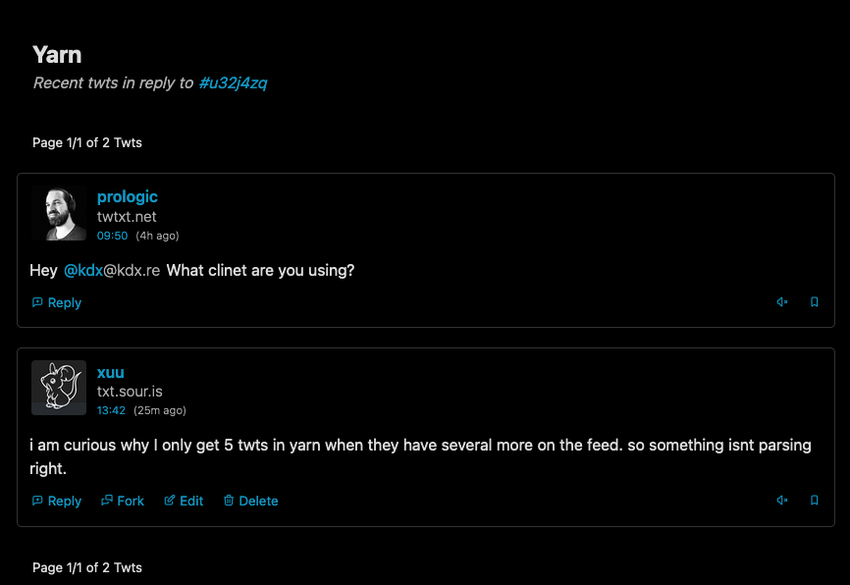
↳
In-reply-to
»
i am curious why we only get 5 twts in yarn when they have several more on the feed. so something isnt parsing right.
⤋ Read More
@mckinley@twtxt.net very weird things going on for me.. i can see your twt but its not showing up as a reply or fork?
I think I’m going to create some boilerplate code for !gestku that isn’t ad-hoc. I think I’m ready for this. Gestkus need less code because of how quickly I want to make them.
Did not want to start my day with a hike today, so I borrowed my daughter’s kickbike and let the dog pull me for some kilometres. He did better today then ever before. He hit his top speed and just kept going.
New GitHub CLI extension tools
Support for GitHub CLI extensions has been expanded with new authorship tools and more ways to discover and install custom commands. Learn how to write powerful extensions in Go and find new commands to install. ⌘ Read more
New repository: aquilax/with - with* helper functions for go
projects: built raven, a small twtxt client in go
“(1) we don’t know what is going on in LLMs (2) it’s outlandish to say that LLMs have no understanding of the world” both claims cannot be true
All packed and ready to go to Vienna!
I think boredom is a real force that pushes ourselves to the edge, to hopefully make a change in life, like going out to see real people. Social media creates this cozy, safe place to keep your mind occupied, letting life pass without realizing it. Social media may prevent users from reaping creative rewards of profound boredom | Hacker News
Why I Won’t Go to Restaurants in 2023
I’ve decided after some consideration to not go to restaurants at all in 2023.
You can call this a New Year’s Resolution.
It’ll require at least some sacrifice, pain, annoyance to myself and perhaps others, but I’m going to stick by it and I think it will have a good effect.
Restaurants are a drastically over-used creature comfort of … ⌘ Read more
Why I Won’t Go to Restaurants in 2023
I’ve decided after some consideration to not go to restaurants at all in 2023.
You can call this a New Year’s Resolution.
It’ll require at least some sacrifice, pain, annoyance to myself and perhaps others, but I’m going to stick by it and I think it will have a good effect.
Restaurants are a drastically over-used creature comfort of … ⌘ Read more
↳
In-reply-to
»
Tutorial: Getting started with generics - The Go Programming Language -- Okay @xuu I quite like Go's generics now 🤣 After going through this myself I like the semantics and the syntax. I'm glad they did a lot of work on this to keep it simple to both understand and use (just like the rest of Go) 👌 Media #GoLang #Generics
⤋ Read More
@prologic@twtxt.net see where its used maybe that can help.
https://github.com/sour-is/ev/blob/main/app/peerfinder/http.go#L153
This is an upsert. So I pass a streamID which is like a globally unique id for the object. And then see how the type of the parameter in the function is used to infer the generic type. In the function it will create a new *Info and populate it from the datastore to pass to the function. The func will do its modifications and if it returns a nil error it will commit the changes.
The PA type contract ensures that the type fulfills the Aggregate interface and is a pointer to type at compile time.
↳
In-reply-to
»
Tutorial: Getting started with generics - The Go Programming Language -- Okay @xuu I quite like Go's generics now 🤣 After going through this myself I like the semantics and the syntax. I'm glad they did a lot of work on this to keep it simple to both understand and use (just like the rest of Go) 👌 Media #GoLang #Generics
⤋ Read More
@prologic@twtxt.net see where its used maybe that can help.
https://github.com/sour-is/ev/blob/main/app/peerfinder/http.go#L153
This is an upsert. So I pass a streamID which is like a globally unique id for the object. And then see how the type of the parameter in the function is used to infer the generic type. In the function it will create a new *Info and populate it from the datastore to pass to the function. The func will do its modifications and if it returns a nil error it will commit the changes.
The PA type contract ensures that the type fulfills the Aggregate interface and is a pointer to type at compile time.
@prologic@twtxt.net On the one hand, twtxt has become more popular thanks to Yarn.social. On the other hand, subject and hashtag extensions took away the simplicity of the protocol. For example, it is impossible to understand which conversation (#base32hash) a tweet refers to or to reply to a tweet without going to a yarn.social pod. Compare with re: in this tweet which can be written without using any client at all
↳
In-reply-to
»
Tutorial: Getting started with generics - The Go Programming Language -- Okay @xuu I quite like Go's generics now 🤣 After going through this myself I like the semantics and the syntax. I'm glad they did a lot of work on this to keep it simple to both understand and use (just like the rest of Go) 👌 Media #GoLang #Generics
⤋ Read More
one that i think is pretty interesting is building up dependent constraints. see here.. it accepts a type but requires the use of a pointer to type.
https://github.com/sour-is/ev/blob/main/pkg/es/es.go#L315-L325
↳
In-reply-to
»
Tutorial: Getting started with generics - The Go Programming Language -- Okay @xuu I quite like Go's generics now 🤣 After going through this myself I like the semantics and the syntax. I'm glad they did a lot of work on this to keep it simple to both understand and use (just like the rest of Go) 👌 Media #GoLang #Generics
⤋ Read More
one that i think is pretty interesting is building up dependent constraints. see here.. it accepts a type but requires the use of a pointer to type.
https://github.com/sour-is/ev/blob/main/pkg/es/es.go#L315-L325
I learned how to make gopls syntax highlight go templates in VSCodium.
By adding the following to my config
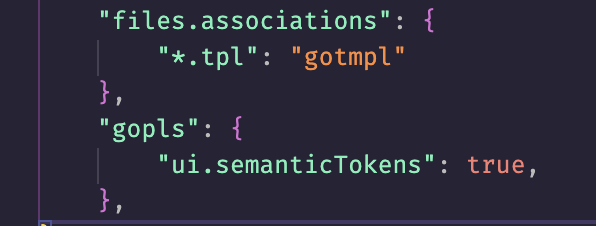
i could go from 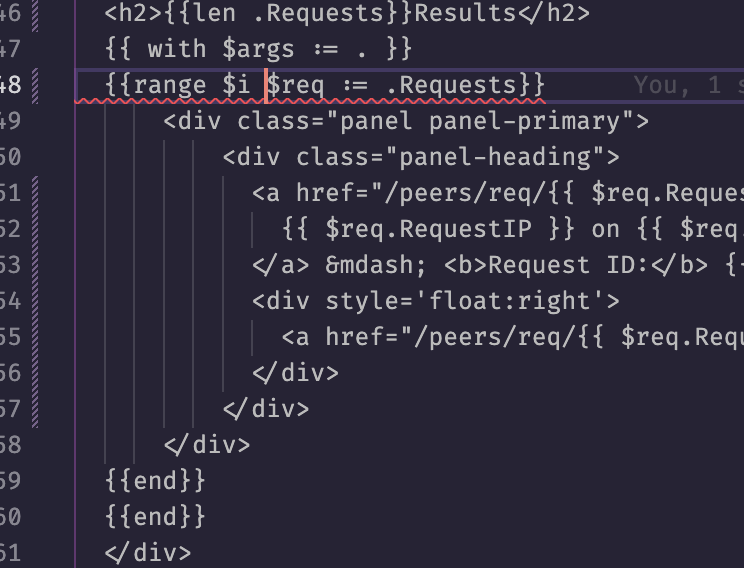 into
into 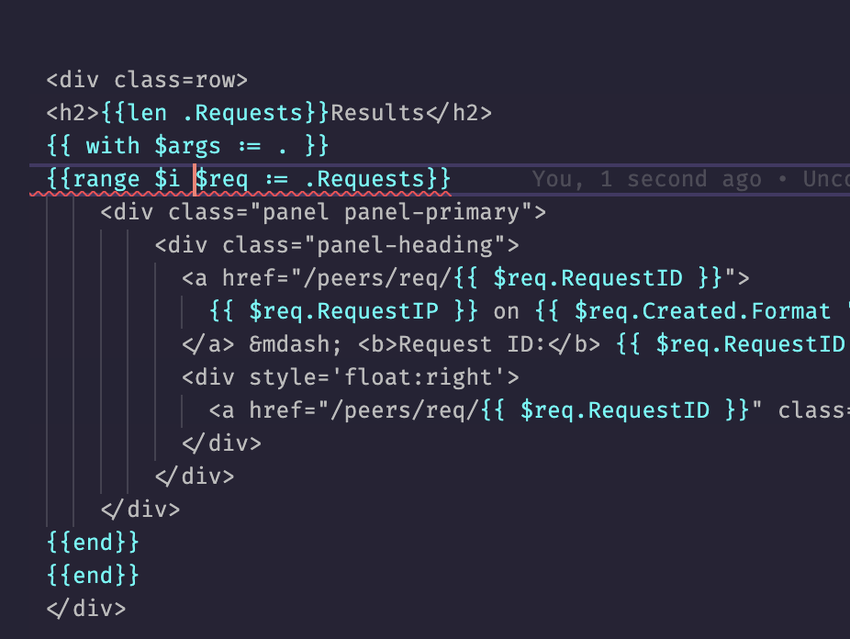
I learned how to make gopls syntax highlight go templates in VSCodium.
By adding the following to my config
i could go from into
Data Point
 ⌘ Read more
Tutorial: Getting started with generics - The Go Programming Language – Okay @xuu@txt.sour.is I quite like Go’s generics now 🤣 After going through this myself I like the semantics and the syntax. I’m glad they did a lot of work on this to keep it simple to both understand and use (just like the rest of Go) 👌  #GoLang #Generics
ChatGPT is good, but it’s not that good 🤣 I asked it to write a program in Go that performs double ratcheting and well the code is total garbage 😅 – Its only as good as the inputs it was trained on 🤣 #OpenAI #GPT3
Should I sell my PC?
I’m not sure yet what I’m going to do with my desktop computer (ASRock Deskmini A300), which I don’t really use anymore since I got my new laptop. ⌘ Read more
I need to learn how to crash dates that are going nowhere with way too much escalation. That should be fun
What was the first PDA?
It wasn’t the Palm Pilot. Nor the Newton. Let’s keep going back to find the answer… ⌘ Read more
** December adventure **
Over the past couple years I’ve done the advent of code to varying degrees. I thought I was going to do it again this year but decided to try something different. I’ve been calling what came together a“ December Adventure.”
It isn’t anything fancy; throughout December I aim to write a little bit of code everyday. So far I’ve written a bit of apl, bash, elisp, explored a bunch of flavors of scheme, and star … ⌘ Read more