使用 Go 語言創建自己的密碼加密工具
Go 語言藉助它的簡單性和強大的標準庫,實現一個自己的密碼加密工具非常簡單。在本篇文章中,我們將會結合代碼示例深入探討如何使用 Go 語言的 crypto 包來實現自己的加密工具。首先,我們需要 import 必要的包:package mainimport ( ”crypto/aes” ”crypto/cipher” ”crypto/rand” ”fmt” ”io”) ⌘ Read more
Where is Humanity Going to Shid Now? Ep 1 ⌘ Read more
一篇文章帶你瞭解 Go 語言基礎之併發(channel)
前言–Hi,大家好,我是碼農,星期八,本篇繼續帶來 Go 語言併發基礎,channel 如何使用。看看 Go 協程如何配合 channel。快來上車叭。爲什麼需要 channel————-channel 在 Go 中,也叫做管道,是用來多線程之間共享數據的。通常情況下,在 Go 中共享數據用的也是channel,但是在 Go 有兩種共享數據方式。共享內存實現通訊。 通過管道 ⌘ Read more
Go 淺析主流日誌庫:從設計層學習如何集成日誌輪轉與切割功能
前言在現有的日誌庫中,包括 go 1.21.0 引入的 slog 日誌庫,它們通常都支持對日誌文件進行輪轉與切割,只不過這些功能並不直接被內置,而是需要我們主動配置來啓用。本文將探討幾個熱門的日誌庫如 logrus、zap 和官網的 slog,我將分析這些庫的的關鍵設計元素,探討它們是如何支持日誌輪轉與切割功能的配置。 淺析 logrus、zap 和 slog 的設計在對 logrus、zap 和 ⌘ Read more
一文搞懂 Go gRPC 服務 Handler 單元測試
在雲原生時代和微服務架構背景下,HTTP 和 RPC 協議成爲服務間通信和與客戶端交互的兩種主要方式。對於 Go 語言而言,標準庫提供了 net/http/httptest 包,爲開發人員提供了便捷的方式來構建服務端 HTTP Handler 單元測試的測試腳手架代碼,而無需真正建立 HTTP 服務器,讓開發人員可以聚焦於對 Handler 業務邏輯的測試。比如下面這個示例:// grpc-tes ⌘ Read more
Going for Codeberg to support a non-profit organisation that stands for the common good.
Go: select 實戰指南:協程切換技術
概述Go 語言的併發編程模型以其簡潔而強大的 goroutine 爲特色。而 select 語句則是在多個通信操作中選擇一個執行的關鍵工具。本文將討論如何使用 select 切換協程,通過清晰的示例代碼,幫助讀者掌握這一重要的併發編程技巧。select 語句的基本結構package mainimport ( “fmt” “time”)func main() { ch1 := make(chan s ⌘ Read more
Go 語言讀取 YAML 配置文件教程
在 Go 語言項目中,處理配置文件是一項常見的任務。YAML 是一種易讀易寫的配置文件格式,本教程將指導你如何在 Go 中讀取和解析 YAML 文件。我們將按照章節的形式逐步介紹相關的概念和示例代碼。第一章:引入依賴——–在開始之前,我們需要引入一個 YAML 解析的第三方庫。推薦使用 gopkg.in/yaml.v2。go get gopkg.in/yaml.v2第二章:創建 YAML ⌘ Read more
Go 打造高效的聊天系統
*概述構建一個高效的 Go 語言聊天服務器是一個具有挑戰性而又令人興奮的任務。本文將通過示例代碼和註釋,逐步實現一個功能強大的 Go 語言聊天服務器。通過清晰的項目結構和合理的邏輯劃分,將能夠理解服務器的設計和實現。1. 項目規劃與結構設計1.1 項目規劃在開始構建聊天服務器之前,需要進行項目規劃。明確通信協議、確定服務器功能和定義用戶管理方式是關鍵步驟。1.2 結構設計設計一個清晰的結構是確保項 ⌘ Read more
Go 語言 CSP 編程實戰:通道通信技術
*概述通信順序進程(Communicating Sequential Processes,CSP)是一種併發編程的形式化理論,由計算機科學家 Tony Hoare 於 1978 年提出。在 Go 語言中,CSP 被廣泛應用,通過通道(Channel)實現了簡單且強大的併發模型。本文將介紹 Go 語言中的 CSP 概念,通過詳細的示例代碼和註釋,理解 CSP 的運作原理和在 Go 中的實現。1. C ⌘ Read more
Go 排序算法探祕:打造通用 qsort 函數
*概述快速排序(QuickSort)是一種經典的排序算法,其高效性和廣泛應用使之成爲計算機科學領域的瑰寶。本文將介紹如何在 Go 語言中封裝快速排序函數,使其更易用、更具通用性,並通過示例和代碼解釋,讓讀者深入瞭解其原理和實現。1. 快速排序算法簡介1.1 算法原理快速排序是一種分治策略的排序算法,基本思想是通過選定一個基準元素。將序列分爲兩部分,小於基準的元素放在左邊,大於基準的元素放在右邊,然 ⌘ Read more
Go 語言項目命名規範(2023 年最新版)
在 Go 語言中,良好的命名規範是構建清晰、可讀和可維護代碼的關鍵。本指南旨在幫助你制定一致的命名規範,使你的 Go 項目更加整潔和易於理解。在實際項目開發中,每個項目組的成員開發習慣不一樣,可能會有自己的一些規範,所以這個規範僅供參考。第一章:包命名規範在 Go 中,包是代碼組織的基本單元。包名應該簡短而具有描述性。使用小寫字母: 包名應該使用小寫字母,不要使用下劃線或混合大小寫。 ⌘ Read more
↳
In-reply-to
»
I have added a webmention endpoint to https://darch.dk using https://webmention.io - let see if it work from neotxt.dk to @sorenpeter
⤋ Read More
@darch@neotxt.dk webmentions are dispatched from here https://git.mills.io/yarnsocial/yarn/src/branch/main/internal/post_handler.go#L160-L169
↳
In-reply-to
»
I have added a webmention endpoint to https://darch.dk using https://webmention.io - let see if it work from neotxt.dk to @sorenpeter
⤋ Read More
@darch@neotxt.dk webmentions are dispatched from here https://git.mills.io/yarnsocial/yarn/src/branch/main/internal/post_handler.go#L160-L169
↳
In-reply-to
»
wtf is going on with Microsoft and OpenAI of late?! LIke Microsoft bought into OpenAI for some shocking $10bn USD, then Sam Altman gor fired, now he's been hired by Microsoft to run up a new "AI" division. wtf/! seriously?! 🤔 #Microsoft #OpenAI #Scandal
⤋ Read More
@prologic@twtxt.net its not.. There are going to be 1000s of copy cat apps built on AI. And they will all die out when the companies that have the AI platforms copy them. It happened all the time with windows and mac os. And iphone.. Like flashlight and sound recorder apps.
↳
In-reply-to
»
wtf is going on with Microsoft and OpenAI of late?! LIke Microsoft bought into OpenAI for some shocking $10bn USD, then Sam Altman gor fired, now he's been hired by Microsoft to run up a new "AI" division. wtf/! seriously?! 🤔 #Microsoft #OpenAI #Scandal
⤋ Read More
@prologic@twtxt.net its not.. There are going to be 1000s of copy cat apps built on AI. And they will all die out when the companies that have the AI platforms copy them. It happened all the time with windows and mac os. And iphone.. Like flashlight and sound recorder apps.
Go Noles! 11-0!
↳
In-reply-to
»
wtf is going on with Microsoft and OpenAI of late?! LIke Microsoft bought into OpenAI for some shocking $10bn USD, then Sam Altman gor fired, now he's been hired by Microsoft to run up a new "AI" division. wtf/! seriously?! 🤔 #Microsoft #OpenAI #Scandal
⤋ Read More
@prologic@twtxt.net the going theory is that openAI announced a new product that pretty much blew up the project of one of the board members. So that board member got 3 others to vote to fire Sam.
↳
In-reply-to
»
wtf is going on with Microsoft and OpenAI of late?! LIke Microsoft bought into OpenAI for some shocking $10bn USD, then Sam Altman gor fired, now he's been hired by Microsoft to run up a new "AI" division. wtf/! seriously?! 🤔 #Microsoft #OpenAI #Scandal
⤋ Read More
@prologic@twtxt.net the going theory is that openAI announced a new product that pretty much blew up the project of one of the board members. So that board member got 3 others to vote to fire Sam.
wtf is going on with Microsoft and OpenAI of late?! LIke Microsoft bought into OpenAI for some shocking $10bn USD, then Sam Altman gor fired, now he’s been hired by Microsoft to run up a new “AI” division. wtf/! seriously?! 🤔 #Microsoft #OpenAI #Scandal
↳
In-reply-to
»
So.. Of y'all that had covid. Did you have at the end a night where for no reason your brain amped up to 11 and can't sleep at all? It happened to me last night and my FIL the night before.
⤋ Read More
@movq@www.uninformativ.de I lasted for a long time.. Not sure where or when it was “got”. We had been having a cold go around with the kiddos for about a week when the wife started getting sicker than normal. Did a test and she was positive. We tested the rest of the fam and got nothing. Till about 2 days later and myself and the others were positive. It largely hasn’t been too bad a little feaver and stuffy noses.
But whatever it was that hit a few days ago was horrible. Like whatever switch in my head that goes to sleep mode was shut off. I would lay down and even though I felt sleepy, I couldn’t actually go to sleep. The anxiety hit soon after and I was just awake with no relief. And it persisted that way for three nights. I got some meds from the clinic that seemed to finally get me to sleep.
Now the morning after I realized for all that time a part of me was missing. I would close my eyes and it would just go dark. No imagination, no pictures, nothing. Normally I can visualize things as I read or think about stuff.. But for the last few days it was just nothing. The waking up to it was quite shocking.
Though its just the first night.. I guess I’ll have to see if it persists. 🤞
↳
In-reply-to
»
So.. Of y'all that had covid. Did you have at the end a night where for no reason your brain amped up to 11 and can't sleep at all? It happened to me last night and my FIL the night before.
⤋ Read More
@movq@www.uninformativ.de I lasted for a long time.. Not sure where or when it was “got”. We had been having a cold go around with the kiddos for about a week when the wife started getting sicker than normal. Did a test and she was positive. We tested the rest of the fam and got nothing. Till about 2 days later and myself and the others were positive. It largely hasn’t been too bad a little feaver and stuffy noses.
But whatever it was that hit a few days ago was horrible. Like whatever switch in my head that goes to sleep mode was shut off. I would lay down and even though I felt sleepy, I couldn’t actually go to sleep. The anxiety hit soon after and I was just awake with no relief. And it persisted that way for three nights. I got some meds from the clinic that seemed to finally get me to sleep.
Now the morning after I realized for all that time a part of me was missing. I would close my eyes and it would just go dark. No imagination, no pictures, nothing. Normally I can visualize things as I read or think about stuff.. But for the last few days it was just nothing. The waking up to it was quite shocking.
Though its just the first night.. I guess I’ll have to see if it persists. 🤞
At $14 each, price is ‘no barrier’ for Aussie mangoes in the US
It takes two weeks for these Aussie mangoes to go from a farm to a US supermarket shelf. But for Manbulloo Mangoes it’s been worth it. ⌘ Read more
Today it’s cold, a bit of snow in the air. I’ll head out for a long walk in a bit, I’ll go a new place, a 9km trail. I’ll try to remember to take some pictures.
Wish you all a great Saturday!
На сайте PEGI появилась возможная дата релиза Dragon‘s Dogma 2 — 22 марта 2024-го
Ранее в Capcom говорили, что выпустят крупную игру до конца текущего финансового года.
Wondering how that person in Nebraska is doing keeping that cornerstone open-source package going.
Popular winemaker saved from closure by new investors and old hands
Cassegrain Wines on the NSW Mid North Coast is purchased by a syndicate of investors including the son of its former managing director, after going into voluntary administration earlier this year. ⌘ Read more
How to Turn Off iMessage on Mac
Some Mac users may wish to not receive messages, iMessages, and texts messages on their Mac, but by default if you have logged into iCloud on a Mac you will find that iMessage is also enabled, meaning you will get messages in MacOS. If you’re wondering how to stop messages from going to the Mac, … Read More ⌘ Read more
↳
In-reply-to
»
Did not expect anything less from meta. Pay or we will track you. Should be illegal. Media
⤋ Read More
@prologic@twtxt.net I only use it so that family that follow me can see the images I post.
I do not browse around and spend time there, just check what family and friends have posted.
But still - makes me mad that they put that tracking infront of a paywall like that.
Hate putting money in zuckerberg’s pocket.
Same with VR - you need a meta account to use the oculus.. and you get full screen notification inside the VR headset if you do not use that.. Luckily there is a trail going on in Norway now..
https://www.datatilsynet.no/en/news/aktuelle-nyheter-2023/meta-case-brought-to-the-european-level/
My daughter started with indoor sand volleyball yesterday, she is now going to go there 2x a week, so happy that she found something she likes, her best friend started too - so they will go together there :)
So Youtube rea really cracking down on Ad-blockers. The new popup is a warning saying you can watch 3 videos before you can watch no more. Not sure for how long. I guess my options are a) wait for the ad-blockers to catch-up b) pay for Youtube c) Stop using Youtube.
I think I’m going with c) Stop using Youtube.
How to Find Your Instagram Password & Username
Instagram is one of the most popular social networks in the world, where people post and share videos, reels, pictures, and so much more. You may occasionally come across a situation where you need to find your exact Instagram username, login information, or even Instagram password, and that’s what we’re going to help you out … Read More ⌘ Read more
Been working for two weeks straight, so now Im going to relax and enjoy the weekend. What are you all up to this weekend?
Doctor’s Office
 ⌘ Read more
Finally went to a place I’ve been wanting to go to for a long time. There used to be train tracks here, but now it’s a gravel road and nature reserve. I had my biike and he ran for many kilometres. 2 degrees, rain, forgot my gloves, but it was all worth it :)
GO NOLES! 38-20 over #16 Duke!
The Golden Gophers win 12-10 against Iowa! Go Gophers! What a game!
How to Show Mac Games Only on Steam
Steam is a very popular gaming platform, but one frustrating thing about browsing Steam on a Mac can be when you find a game you might like, go to check it out, and then discover it’s for Windows only. Why’d you see a Windows only game in the Steam Store when you’re using Steam on … Read More ⌘ Read more
This is some cool development for the go 1.22 standard http mux. Its adding the ability to have path vars and define methods for handlers. Also the errors are quite helpful if you have conflicting paths!
https://eli.thegreenplace.net/2023/better-http-server-routing-in-go-122/
This is some cool development for the go 1.22 standard http mux. Its adding the ability to have path vars and define methods for handlers. Also the errors are quite helpful if you have conflicting paths!
https://eli.thegreenplace.net/2023/better-http-server-routing-in-go-122/
A 7 year old boy has been missing in a forest since Sunday after he got away from his family that he was on a hunt with, its the biggest search party In a long while that has been looking for him, hundreds and hundreds of people, some has been helping out with drones (and driven 800km to get there), and search dogs from all over Norway joined. And sadly today they found a dead person there. It’s really sad. Been thinking about him every day, and especially when I go to bed, and then think that this 7 year old has been missing outside, at night alone etc. weather has not been nice either. Ooooffff…
Haiku OS - What’s going wrong and how to fix it
Listen now (31 mins) | Lunduke’s Big Tech Show - October 16th, 2023 ⌘ Read more
8 of the Best iPadOS 17 Features to Use Right Now
If you’ve already gone ahead and installed iPadOS 17 on your iPad, or are simply wondering about what is new, we’re going to take a look at the best iPadOS 17 features that you can use and appreciate right now on iPad. While there are many small changes scattered throughout iPadOS 17, some of the … Read More ⌘ Read more
Some iPhones Are Restarting or Turning Off Randomly at Night
Some iPhone users are discovering their iPhone has either randomly rebooted, or turned itself off, usually while plugged in overnight. Perhaps worst of all, when the iPhone starts back up, any set alarm may not go off, which has led some people to oversleep or to have to rely on a backup alarm. While not … Read More ⌘ Read more
So, a husky will pull. Tried all kinds of training for it, but his pulling does not go away, often it’s OK when we walk with a regular collar, but he can also pull crazy hard with that - he just does not care if he chokes. when I walk with harness - he can pull as much as he wants\needs (since we both have one). But the problem is that he still pulls as hard on leash, tried one of those ‘slip’ leashes for a good while, but he could not care less.
So today I bought something else (see attached image (not my dog in the image)). And this thing is magical, honestly.
He does not like to have it on much yet, but I can now hold the leash with one finger. And the thing is that when you use this - they most likely will learn from that and walk nice on regular leash as well.
So yeah, just wanted to mention it, since it works better then anything else I’ve tried.
@movq@www.uninformativ.de it worked yesterday, but today hes all over the place, not calming down much. We’re going to burgerking later today, so he’ll get some crate time in the car then (he always relaxes when he’s in the car).
↳
In-reply-to
»
Finally weekend again, gonna be nice!
⤋ Read More
@prologic@twtxt.net not much planned. But tonight is family time, make nachos and see a movie together. Maybe Ill go biking with the dog to tire him out a bit, got a new place I want to go to (9km trail). :)
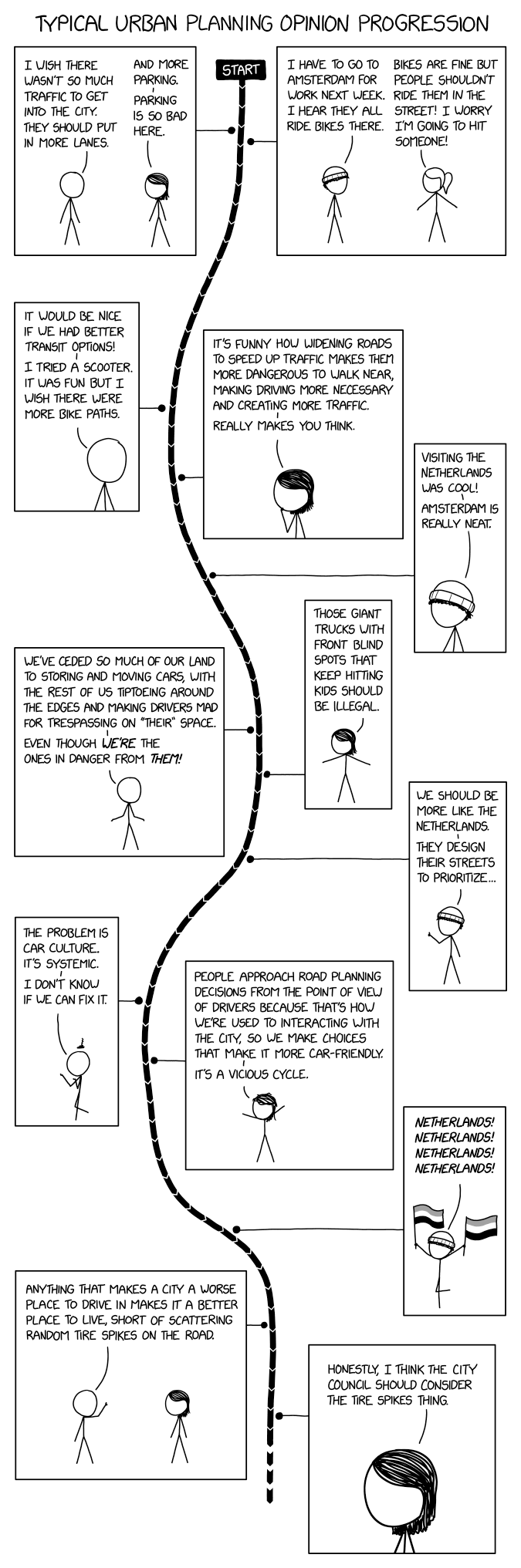
Urban Planning Opinion Progression
 ⌘ Read more
↳
In-reply-to
»
What are we up to this weekend?
⤋ Read More
@mckinley@twtxt.net Dog walking, and my son started with organized football this week, so he’s going on a tournament tomorrow (3 matches).
Been working a lot as well (from home).. So busy weekend for sure. How about you?
** Updates from the end of summer **
Today was the last real day of summer for us. Tomorrow the kids go back to school.
You know those last few weeks before the dark of autumn — the ones that hold the last bursts of summer? Those days where you try to squeeze in as many chill summer vibes as humanly possible?
I’ve bee … ⌘ Read more
How about those Golden Gophers? Great win tonight over Nebraska with 10 points in the last few minutes. Go Gophers!
New repository: aquilax/goligo - Goligo go with lisp syntax experiment
↳
In-reply-to
»
@prologic here is what I got :
Media
⤋ Read More
@bender@twtxt.net thank you! I just came back from a 5km bike trail run, it was great. first time on a trail with bike, super narrow gravel, and trails, trees and forest all over, went really nice, its so cool that he knows the commmands I need, left, right, easy, go etc. makes me really proud, this is exactly what I wanted when we got our husky, and its so nice to see him grow in that way.
Snikket: State of Snikket 2023
This is our first blog post for quite a while, and the last few have all been technical updates of various kinds about the Snikket software. In fact it’s been almost two years since the last post that gave a general progress update on the Snikket project itself, so let’s fix that!
You’ll be pleased to hear that Snikket is very much alive, and although there hasn’t been much of a show to see here, a bunch of stuff has been going on backstage.
We plan to catch you up with our progres … ⌘ Read more
Anyways, I’ve been putting off walking in to the forest again (and going to the cheaper hypermarché at the same time). Should probably get around to that before the hookening
Got contacted on instagram from someone who wanted to buy some of my images (NFT), I have been putting the images I liked the most into a collection (and add new ones when I take Images I think is good enough) into the collection. Just letting it sit there to see if I can make a sale one day.
Not sure yet if the person is serious or not - but If I could make a sale - then I’m all for it.
It’s much easier to put things up for sale as NFT then other ways.
I sell them as a 1 item thing. And put a price that I think is fair (Fixed price on all, but based on the amount of time I actually spend getting to all these locations).
One thing I have not liked about NFT is all the crap art stuff that there that takes 0 effort, but I do at least spend time picking out where we go. And each image has a memory attached to it, a trip with my family to that exact place..
Why Are We Going to the South Pole of the Moon? ⌘ Read more
I’m curious. How many people truly believe blockchain social networks are the future?
NFTs, tokens, monetization, revenue…
I’m sorry, but how are your random social media blabbers worth any money?
Unless you’re Shakespeare or Einstein or some philosophical or scientific genius, I don’t see why anyone would want to read your posts, let alone cash out some “crypto” from some “wallet”.
And that applies to most people. Sure, your lifestyle and your thoughts may be interesting. But who’s going to start paying to view what’s going on in your life?
As if likes, upvotes, hearts, and subscriptions weren’t narcissistic enough, let’s make people think someone wants to pay them with crypto to view their random posts online.
Why Artemis III Is Going To The Lunar South Pole | Neil deGrasse Tyson Explains… ⌘ Read more
Tidying up the house, throwing away all the clutter. Going to feel good later today when we’re done.
Why dragonfruit plants go rogue, and how to tame it
Juicy dragonfruits have become a popular snack and garden plant, but beware — they can go rogue before you know it. ⌘ Read more
Portioned out some raw meat for the dog, we usually buy it as frozen meatballs, but they have bigger frozen sauages of raw meat that you can buy, more meat for less price. So decided to go for that now, so got my axe and made it into daily portions.
↳
In-reply-to
»
why am I not surprised?… https://uk.pcmag.com/ai/147757/elon-musk-will-train-his-ai-project-using-your-tweets
⤋ Read More
Yeah, that would be nice! At least when you think about the way things are going these days..
@reddit_world_news@feeds.twtxt.net nice! if it helps people - then go for it!
↳
In-reply-to
»
been using the iphone for some days now, and I must say im impressed. I really like it. I will not buy android phone ever again.
⤋ Read More
If you are going to compare iPhone with android you can’t just throw out bargan bin android phones.. Should compare within the same price points like the Pixel, Galaxy, Pine, or OnePlus models.
↳
In-reply-to
»
been using the iphone for some days now, and I must say im impressed. I really like it. I will not buy android phone ever again.
⤋ Read More
If you are going to compare iPhone with android you can’t just throw out bargan bin android phones.. Should compare within the same price points like the Pixel, Galaxy, Pine, or OnePlus models.
got two computers donated from work, xeon server machines. set them up for my kids. they do not know that ill give those to them yet. they have been asking about them, and asked if they can play roblox on them and such. they are going to be so happy tomorrow when they get the machines set up in their room tomorrow :)
Twitter timelines are not refreshing properly since last night’s events started. they must have some crazy traffic going on.
New repository: aquilax/do - Tiny Go library for lexical scope wrapping
What a way to go.
Today our daughter has invited her friends over to celebrate her birthday in advance, so we’re spending time doing that today :) Going to be a nice day!
Man, I was hoping for good weather this weekend so I could go fishing at a local beach Sunday. We’ll see how it goes but I’m not all that optimistic now.
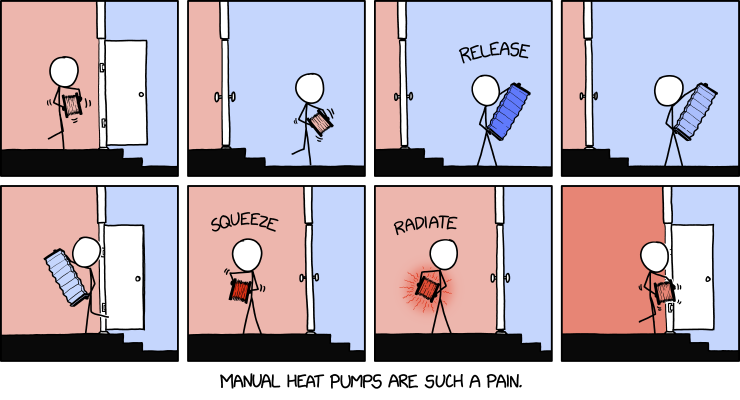
Heat Pump
 ⌘ Read more
hrxi: Windows support for Dino
Hello, I’m back!
It’s been four years since I participated in my first Google Summer of\
Code. I’m hrxi, a mathematics student from Germany. I got accepted
into this year’s Google Summer of Code program with the XMPP software\
foundation as the mentoring
organisation. I chose the extended\
timeline, so I am
going to work on [ … ⌘ Read more
Social media trap
reddit going dark (a protest action by many subreddit moderators over some planned API changes) reminds me that I should probably stop scrolling through Reddit so much. Reddit is a social network, and as such it attracts you with new content almost every time you visit. Which can be addictive. I once had a profile that I deleted because I wanted to leave all social media. But I fell into the same trap again. ⌘ Read more
Australian wines are going through a ‘golden period’ — now there’s awards to prove it
Australian wines have been labelled ‘the best in the world’ after dominating a prestigious international wine awards, taking home more ‘Best in Show’ awards than any other country ⌘ Read more
↳
In-reply-to
»
Russia blowing up the Nova Kakhovka dam is an incomprehensible war crime. Among other things, it drains water from the Zaporizhzhia nuclear power plant, water that is needed for cooling. They are trying to generate a widespread disaster.
⤋ Read More
@abucci@anthony.buc.ci I think the problem is that NATO does not want to get directly involved, because that scales up everything.
So they provide with the things they can to help instead. It worries me a bit (even though I live in the South of Norway - and Russia borders in the north), but it helps a lot that we have Sweden and Finland next to us. But if shit hits the fan - then it won’t be easy to get anywhere from here, unless we steal a boat and go to England or something like that (or get on a plane).
I try not to worry, but it’s in the back of my mind still.. But we have talked about it in my family, and if things happen then we have a plan on what to do first.
Ubuntu going 100% Snappy in 2024?
According to one Canonical developer: Ubuntu is going all Snap & fully immutable in 24.04. ⌘ Read more
New repository: aquilax/calendars - Go packages for working with different calendars
We have Monday off work again, going to be super nice with a long weekend again! :)
What’s going on?
This post is meant for a little reflection because I’ve noticed a few things that I can’t quite place. ⌘ Read more
well, public transport got delayed so i guess a late night walk is gonna make up for it. gonna go back this weekend to savor the main dish i ordered
9 tips to go from attendee to speaker at a tech conference
Here’s what you need to know to write a compelling session proposal and get on stage. ⌘ Read more
Design’s journey towards accessibility
Design can have a significant impact on delivering accessible experiences to our users. It takes a cultural shift, dedicated experts, and permission to make progress over perfection in order to build momentum. We’ve got a long way to go, but we’re starting to see a real shift in our journey to make GitHub a true home for all developers. ⌘ Read more
I’m going to have to take everything offline for a few hours at home since I need to go replace my physical internet box and collect the new one
I wish I could turn into a bear so I could go to my cave and sleep for three months
The Lightning lost, but at least the Avalanche and Bruins lost, too. I’m going to have to root for the Florida Panthers now.
↳
In-reply-to
»
Today I get a free (used) bike, was nice of them to aak if we needed it. So now Nanook can start running while I bike, that will be great! (And a challenge).
⤋ Read More
Got that bike today, and nanook ran home pulling me like a rocket. So fun when training on commands - run, go, left, right works. Avoids all obstacles etc. Was really fun! And for once he’s tired :)
College Knowledge
 ⌘ Read more
**RT by @mind_booster: 🧰 5 changes to fix the EC’s #RightToRepair proposal 🛠️
1️⃣ No contractual overrides
2️⃣ No digital locks
3️⃣ Go beyond just fixing things
4️⃣ Don’t limit who can repair
5️⃣ Broaden the scope of what can be repaired
Blog 👉 https://www.knowledgerights21.org/news-story/still-time-to-repair-the-commission-proposal-on-the-right-to-repair/
Response 👉 https://kr21.info/r2r**
🧰 5 changes to fix the EC’s #RightToRepair proposal 🛠️
1️⃣ No contractual ov … ⌘ Read more
↳
In-reply-to
»
Been a really nice day today. Just one more day at the office then it's a long weekend (We have Monday off work). Looking forward to that!
⤋ Read More
@carsten@yarn.zn80.net That sounds nice! This weekend we’re going to celebrate my grandmother’s birthday (80) and my stepdad’s birthday (50). So it’ll be a lot of cake this weekend :)
How do I quit getting error 400 when I go to reply to anything? @prologic@twtxt.net ???
I am going to try to install the twtxt Yellow extension from Søren - https://lien.sus.fr/iaxgN
↳
In-reply-to
»
Had to add all my crypto to my taxes, damn that is a painful process. There are online services that helps with that part, so I use that to help. but I have transactions all over the place, so it takes a lot of time. But now it's done for this years tax report :)
⤋ Read More
@prologic@twtxt.net The one I actually use for something is Monero. I also mine it (asic resistant, mined with cpu). The others I just put some savings in every month. The whole pyramid scheme thing - I do not think much about honestly. Crypto is here to stay, won’t go away. And for me it’s better then stocks because I know nothing about stocks and such. I do not put much into it. I also had some NFT stuff that I minted - which I sold for 10x the price later on, but honestly - last year I gained as much as I lost, so it evened out to almost 0.
Man wakes from 2 year coma to find Gentoo stage 2 install still going
“It cut my total time spent waiting for this Gentoo install to complete by almost half!” ⌘ Read more
Escape Speed
 ⌘ Read more
Sam Whited: Concord and Spring Road Linear Parks
In my earlier review of Rose Garden and Jonquil public parks I mentioned
the Mountain-to-River Trail
(M2R), a mixed-use bicycle
and walking trail that connects the two parks.
The two parks I’m going to review today are also connected by the M2R trail in
addition to the [Concord Road Trail](https://blog.samwhited.com/cate … ⌘ Read more
💭 While some people like to jump between blogging software all the time, or go back to Hugo from a custom one, I don’t really miss Hugo after switching to GoBlog in 2020, but enjoy having my own system quite a bit. Not that Hugo, WordPress, etc. are bad blogging systems, but I really enjoy being able to quickly code a fix without having to research docs, StackOverflow, or the source on GitHub. And when I have an idea for a new feature, it would often not be easy to implement in the existing systems. ⌘ Read more
↳
In-reply-to
»
Good morning to you all! Started my day by walking about 5km around a lake that's next to the ocean, a really nice place to walk. It rains today, so not many people out (which I like). So now the dog is sleeping on the sofa. My daughter went to a friend for a visit today, and my son is just chilling and watching youtube. So it's a nice chill start to this Saturday :) Hope you all have a great day!
⤋ Read More
@prologic@twtxt.net That sounds great! I’m looking forward to doing that too here! We also go to the local lakes and such when it gets warm enough! Always nice to spend time in the water :)
Got up before 7 this morning, now it’s 14,5 hours later - and I finally got to sit down for the first time today. Been a busy day, but a good one. Now it’s time to relax a bit (code on the desktop client) and then relax for a bit. Tomorrow the weather is going to suck, but I’ll still go for the usual weekend hikes with the dog, trying to plan a new place to walk tomorrow.